


Saturday, March 14, 2026
- Advertisment -
Google search engine
Home Blog Page 12

Nigerian National Ehis Lawrence Akhimie Convicted for Defrauding Elderly U.S. Citizens

0

A Nigerian national pleaded guilty recently to operating a transnational inheritance fraud scheme that defrauded elderly and vulnerable consumers across the United States.

According to court documents, Ehis Lawrence Akhimie, 41, was a member of a group of fraudsters that sent personalized letters to elderly victims in the United States over the course of several years.

The letters falsely claimed that the sender was a representative of a bank in Spain and that the recipient was entitled to receive a multimillion-dollar inheritance left for the recipient by a family member who had died overseas years before.

Akhimie and his co-conspirators allegedly told a series of lies to victims, including that, before they could receive their purported inheritance, they were required to send money for delivery fees, taxes, and other payments to avoid questioning from government authorities.

Akhimie and his co-conspirators allegedly collected money victims sent in response to the fraudulent letters through a complex web of U.S.-based former victims, whom the defendants convinced to receive money and forward to the defendants or persons associated with them.

Victims who sent money never received any purported inheritance funds.  In pleading guilty, Akhimie admitted to defrauding over $6 million from more than 400 victims, many of whom were elderly or otherwise vulnerable.

On June 17, Akhimie pleaded guilty to conspiracy to commit mail and wire fraud. Akhimie faces a maximum penalty of 20 years’ imprisonment.

This is the second indicted case related to this international fraud scheme. Seven other co-conspirators from the United Kingdom, Spain, and Nigeria have previously been convicted and sentenced in connection with this scheme.

On November 1, 2023, the Honorable Kathleen M. Williams sentenced Ezennia Peter Neboh, who was extradited from Spain, to 128 months of imprisonment.

On October 20, 2023, Judge Williams sentenced another defendant who was also extradited from Spain, Kennedy Ikponmwosa, to 97 months of imprisonment.

Three other defendants who were extradited from the United Kingdom also received prison sentences. Judge Williams sentenced Emmanuel Samuel, Jerry Chucks Ozor, and Iheanyichukwu Jonathan Abraham to prison sentences of 82 months, 87 months, and 90 months, respectively, for their roles in the scheme.

Amos Prince Okey Ezemma was paroled into the United States from Nigeria and was sentenced in July 2024 to 90 months imprisonment for his role in the scheme.

Lastly, on April 25, the Honorable Roy K. Altman sentenced Okezie Bonaventure Ogbata, who was extradited from Portugal, to 97 months of incarceration for his role in the scheme.

Cybercriminals Hack Thousands of SMEs With Fake Productivity Apps, Face Closure, Experts Offer Solutions

0

By Funminiyi Philips

In 2025, a staggering 8,500 users from small and medium-sized enterprises (SMEs) globally fell victim to cyberattacks where malicious software was cleverly disguised as popular online productivity tools.

According to a report by Kaspersky, a leading cybersecurity firm, these attacks exploited the trust SMEs have in widely used applications.

Kaspersky analysts conducted a study to determine the frequency of malicious software being disguised as legitimate applications commonly used by SMEs.

They sampled 12 online productivity apps and found a shocking 4,000 unique malicious files disguised as popular apps in 2025.

This highlights the growing threat of cyberattacks and the need for SMEs to be vigilant in protecting themselves.

Cybercrime has become a lucrative business, with hackers and cybercriminals constantly seeking new ways to exploit vulnerabilities and steal sensitive information.

SMEs are often targeted due to their limited resources and inadequate cybersecurity measures.

A cybersecurity expert said, “SMEs are the backbone of many economies, but they are also increasingly vulnerable to cyberattacks. It’s essential for SMEs to take proactive steps to protect themselves from these threats.”

The consequences of cyberattacks can be devastating for SMEs. A single breach can result in significant financial losses, damage to reputation, and loss of customer trust.

A recent study found that 60 per cent of SMEs that experience a cyberattack go out of business within six months. This is a stark reality that SMEs cannot afford to ignore.

To safeguard against cyberattacks, SMEs can take the following steps:
First, install reliable antivirus software that detects and blocks harmful programs. Next, regularly update your software and operating systems to address security vulnerabilities.

Use complex and unique passwords for all accounts, and consider adding an extra layer of security with two-factor authentication. Be cautious with emails and links, avoiding those that appear suspicious and could pose a threat.

Finally, regularly back up important data to prevent data loss in the event of a breach. By following these simple yet effective tips, SMEs can significantly reduce their risk of falling victim to cyberattacks.

The threat of cyberattacks is real, and SMEs need to take proactive steps to protect themselves. SMEs must implement robust cybersecurity measures and educate their employees to reduce their risk of falling victim to these threats.

As the statistics show, the consequences of cyberattacks can be devastating, but with the right approach, SMEs can stay safe online.

Funminiyi B. Philips is a cybersecurity enthusiast

A Disturbing Reality With Alarming Statistics: Infanticide in South Africa Considered Highest Globally

0

Infanticide-the intentional killing of infants under one year old-remains a serious and under-addressed problem in South Africa.

Recent research and official data reveal that South Africa has one of the highest infanticide rates globally, with infants most vulnerable in the first days of life. The issue is deeply intertwined with socio-economic challenges, mental health, and gaps in social services.

According to a landmark national child homicide study by the University of Cape Town’s Children’s Institute, the infanticide rate in South Africa is approximately 28.3 per 100,000 live births, the highest reported globally.

In 2009 alone, 454 children under five years old died due to homicide, with more than half of these victims being neonates or infants within the first 28 days of life. Most strikingly, the majority of these neonaticides occur within the first six days after birth, a critical period when infants are most at risk.

Infanticide is often linked to abandonment, neglect, or direct physical harm. Many neonaticides result from mothers abandoning newborns without care, sometimes with the intention that the child will be found and cared for, but often leading to fatal outcomes. Mothers are predominantly identified as perpetrators in these cases, although the role of fathers and other caregivers remains less clear due to limited data.

Unwanted pregnancies are the leading cause of infanticide in South Africa. Social stigma, poverty, and lack of support for vulnerable mothers exacerbate the problem. Infants with disabilities or those born out of wedlock are also at heightened risk due to cultural biases and family pressures.

Mental health issues, including postpartum depression and psychosis, are believed to contribute to some cases, though systematic mental health assessments of perpetrators are rare. The lack of early detection and intervention in mental health care is a significant gap in preventing infanticide.

Child homicides in South Africa often occur within the home and are linked to broader patterns of family violence and social instability. While infant victims are primarily killed by mothers, as children grow older, the involvement of fathers or mothers’ partners in fatal abuse increases.

Research shows no significant gender bias in child homicides overall, but urban areas report higher rates of male infant deaths compared to rural regions. The complexity of these cases often reflects intersecting issues of domestic violence, poverty, and inadequate social support.

South Africa has legal provisions addressing infanticide under section 239 of the Criminal Procedure Act, but enforcement and prevention remain challenging.

Tribe 09-Wave of Change Empowers Cairo’s Youth, Women to Tackle Climate Challenges Locally

0

Tribe 09 – Wave of Change, a grassroots movement dedicated to sustainability, equity, and community-driven climate action, has been making significant strides in Cairo by engaging youth and women through interactive workshops focused on practical environmental solutions.

The United People Global Sustainability Leadership Program is a global initiative that equips young leaders to take action on the United Nations Sustainable Development Goals, a universal call to end poverty, protect the planet, and ensure peace and prosperity for all by 2030.

Recognising the urgent need to address rising pollution, traffic congestion, and waste management issues in the city, Tribe 09 has centred its efforts on promoting everyday changes that are both accessible and impactful.

The workshops emphasise reducing single-use plastics and adopting sustainable transportation options such as bicycles and electric scooters.

“These sessions are designed to empower participants with simple yet effective habits that improve community health and environmental quality,” said Nouran Aly Farouk, a representative of Tribe 09. “By focusing on local, tangible actions, we aim to foster a culture of sustainability that begins at home and spreads throughout the community.”

The initiative highlights the critical role of women as leaders in driving grassroots transformation. Through education and awareness, Tribe 09 encourages women and young people to become active agents of change, demonstrating that climate action is not only necessary but achievable through collective effort.

As Cairo continues to grapple with environmental challenges, Tribe 09’s approach offers a hopeful model for integrating climate awareness into daily life, proving that small, consistent actions can contribute to a larger wave of change.

“For more information on Tribe 09 – Wave of Change and upcoming workshops, visit their official channels or contact their community outreach team. Our Tribe is working on meaningful sustainability initiatives at the local level, and we believe your voice as a journalist can help tell our story effectively,” Farouk added.

As part of the United People Global Sustainability Leadership Program 2025, each Tribe is working on grassroots initiatives that address one or more of the UN Sustainable Development Goals.

“Our Tribe, in particular, is focusing on ‘Wave of Change’,” noted Farouk.

She described Tribe 09 – Wave of Change as a dynamic and passionate group within the UPG Sustainability Leadership community, known for its bold ideas, deep collaboration, and unwavering commitment to making a tangible difference.

“United by a shared vision of transforming local challenges into global impact, Tribe 09 embodies the spirit of innovation and service. Whether tackling climate education, clean energy, or social equity, their projects reflect a ‘think globally, act locally’ mindset,” said Farouk.

Suburban Chicago Businessman Rahul Shah Convicted Over $55m Bank, PPP Fraud Schemes

0

A federal jury has convicted an Illinois businessman for his role in schemes to fraudulently obtain over $55 million in commercial loans and lines of credit and for submitting fraudulent applications to obtain COVID-19 relief money guaranteed by the U.S. Small Business Administration through the Paycheck Protection Program.

According to court documents and evidence presented at trial, Rahul Shah, 56, of Evanston, the owner and operator of several information technology companies in the Chicago area, fraudulently obtained funds from loans and lines of credit for which he was not eligible from federally insured financial institutions and later defaulted on at least one such line of credit and one such loan.

Shah submitted to federally insured financial institutions falsified bank statements that fraudulently inflated deposits, falsified balance sheets that overstated revenues, and fabricated audited financial statements with forged signatures. Shah also engaged in monetary transactions with proceeds from the bank fraud.

Shah also submitted to a federally insured bank an application for a $441,138 loan guaranteed by the SBA that significantly overstated the payroll expenses of a company he controlled.

In support of the loan application, he submitted to the lender several fraudulent IRS documents, which falsely represented that the company made payments to multiple individuals who had not received such payments.

He also used stolen identities to carry out the fraud, using the names and taxpayer identification numbers of individuals that he knew had not received payments from the company in the PPP loan applications.

In addition, Shah signed and caused to be submitted to the lender what purported to be IRS Forms 941 representing his company’s quarterly payroll expenses for 2019.

A comparison between the documents submitted to the lender and the company’s IRS and state tax filings revealed that Shah’s company reported significantly lower payroll expenses to the tax authorities.

Shah was convicted of seven counts of bank fraud, five counts of making false statements to a financial institution, two counts of money laundering, and two counts of aggravated identity theft. He is scheduled to be sentenced on November 13.

Shah faces up to 30 years in prison on each count of bank fraud and false statements to a financial institution, up to 10 years in prison on each count of money laundering, and up to two years in prison for each aggravated identity theft count.

A federal district court judge will determine the sentence after considering the U.S. Sentencing Guidelines and other statutory factors.

Future Leaders Mobilise for World’s Biggest Sustainability Challenge

0

By Blessed Richard Hamungala

Across cities, villages, and remote communities worldwide, a wave of youthful ambition is sweeping in—over 13,600 young people have applied to be part of the UPG Sustainability Leadership Class of 2025, seeking to join a global movement that is reshaping how local communities respond to sustainability challenges.

Behind every application lies a story of hope, urgency, and a deep desire to make a difference.

The UPG Sustainability Leadership programme is no ordinary training.

It is a transformational journey that equips young adults with tools to lead projects aligned with the United Nations Sustainable Development Goals (SDGs).

From climate action to poverty eradication and quality education, these leaders are stepping into the frontlines of global change.

In 2024, 1,030 leaders from over 100 countries were selected for the Class of 2024. They underwent a rigorous nine-week online training, covering leadership strategies, project design, and community mobilisation.

Today, these certified UPG Leaders are implementing local initiatives — from tree planting campaigns in Africa to waste management solutions in Asia and gender advocacy in Latin America.

Since the programme’s inception in 2019, over 86,000 citizens have been directly trained in sustainability and positive action.

Many go on to train others, multiplying the impact in their communities.

For a few exceptional leaders each year, the journey continues to the USA — to Hurricane Island, where a fully-funded, in-person leadership training pushes boundaries and builds lifelong international networks.

“It’s more than a programme. It’s a movement of young people choosing action over silence,” says one UPG organiser.

Backed by global partnerships and the unwavering support of philanthropist and author Rosamund Zander, the initiative remains free for participants, a rare opportunity in a world where financial barriers often limit access to leadership development.

Blessed Richard Hamungala writes from Siavonga, Zambia.

Hip-Hop Mogul Sean ‘Diddy’ Combs Convicted of Transporting People for Prostitution, Acquitted of Sex Trafficking

0

In a high-profile federal trial that captivated the United States and the global entertainment industry, music mogul Sean “Diddy” Combs was found guilty on Wednesday of transportation to engage in prostitution but acquitted of the more serious charges of sex trafficking and racketeering conspiracy.

The verdict yields a mixed outcome for the 55-year-old founder of Bad Boy Records, who has denied all allegations against him.

The jury, composed of eight men and four women, deliberated for three days before delivering the verdict in a New York courtroom.

Combs faced five counts: one count of racketeering conspiracy, two counts of sex trafficking, and two counts of transportation to engage in prostitution.

While the jury cleared him of racketeering and sex trafficking, they convicted him on the prostitution-related charge, a felony violation of the Mann Act, which prohibits transporting individuals across state lines for prostitution.

Prosecutors painted a disturbing picture of Combs exploiting his wealth, fame, and power over two decades to coerce two of his former romantic partners into participating in drug-fueled, days-long sexual performances with paid male sex workers.

These events, often referred to as “Freak Offs,” allegedly involved Combs watching, masturbating, and sometimes filming the encounters.

During raids of Combs’ residences, authorities reportedly found large quantities of drugs and over 1,000 bottles of baby oil and lubricant, which prosecutors said were used during these sexual performances.

Assistant U.S. Attorney Christy Slavik told the jury, “The defendant used power, violence, and fear to get what he wanted. He thought that his fame, wealth, and power put him above the law.”

However, Combs’ defence team argued that the sexual activities were consensual and part of a swingers lifestyle. His lead attorney, Marc Agnifilo, urged the jury to consider that the prosecution was attempting to criminalise Combs’ private sex life.

The defence acknowledged that Combs could be violent in personal relationships but denied that such behaviour justified the severe charges brought against him.

The acquittal on the most serious charges spares Combs from the possibility of a life sentence, but the conviction on the transportation charge still carries a potential prison term of up to 10 years.

Legal experts suggest that this conviction could significantly damage Combs’ career, which spans music, fashion, reality television, and brand endorsements.

Combs appeared composed as the verdict was read, at times smiling and exchanging gestures with family and supporters in the courtroom.

The mixed verdict brings to a close a dramatic chapter in the life of one of hip-hop’s most influential figures, whose rise from Harlem to global stardom has been marked by both cultural triumphs and personal controversies.

Sentencing is expected in the coming months, and Combs’ legal team has indicated plans to appeal the conviction. The case has sparked widespread discussion about the intersection of celebrity, power, and accountability in the entertainment industry.

Denmark Expands Compulsory Military Draft to Include Women Amid Rising Security Needs

0

For the first time in its history, Denmark has introduced compulsory military service for women, implementing a gender-neutral lottery system that will require both young men and women to potentially serve in the armed forces.

The new law, which took effect on July 1, 2025, requires all Danish citizens turning 18 after this date to register for assessment, with the possibility of being called up for 11 months of military service.

Previously, military service in Denmark was mandatory only for men, while women could volunteer for service. Under the revised system, volunteers will still be prioritised, but any remaining positions will be filled through a lottery that now includes women.

This marks a significant shift in Denmark’s approach to national defence and gender equality, aligning the country with other Nordic nations, such as Norway and Sweden, which have already implemented similar policies.

The changes come amid heightened security concerns in Europe, particularly following Russia’s invasion of Ukraine, and as NATO allies increase defence spending. Danish officials say the move is necessary to strengthen the country’s military readiness and ensure equal participation.

“Gender equality is good, and it increases the opportunity to build combat power in the Armed Forces,” said Acting Chief of Defence Michael Hyldgaard.

Alongside the inclusion of women, Denmark will also extend the length of conscription from four months to 11 months starting in 2026. The first five months will focus on advanced basic training, with the remaining six months dedicated to practical service in various military branches.

The government anticipates that the annual number of conscripts will increase from approximately 4,700 to 6,500 by 2033.

The reform was passed after months of political debate, with broad support from women’s organisations and defence officials. Denmark’s government has also pledged to invest an additional 40.5 billion kroner (about $5.9 billion) in defence over the next five years to meet NATO requirements.

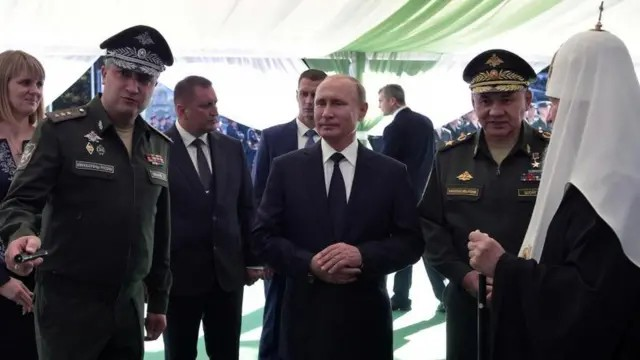
Putin’s Russian Deputy Defence Minister Timur Ivanov Sentenced to 13 Years in Penal Colony for Corruption

0

A Moscow court on Tuesday sentenced Timur Ivanov, Russia’s longtime deputy defence minister, to 13 years in a penal colony after convicting him on high-profile corruption charges.

The verdict marks the harshest penalty yet in a series of graft investigations targeting senior officials within the Russian Defence Ministry during the ongoing war in Ukraine.

Ivanov, 49, who had overseen military construction projects since his 2016 appointment, was arrested in April 2024. Prosecutors accused him of embezzling more than 4 billion rubles (about $50 million) through foreign bank transfers and siphoning additional funds during the purchase of ferries for the Crimea crossing.

The court also fined Ivanov 100 million rubles (approximately $1.2 million) and stripped him of all state honours. Authorities ordered the confiscation of property, luxury vehicles, and cash valued at 2.5 billion rubles.

The trial was held behind closed doors due to concerns about state secrecy. Ivanov, who denied all charges, was reportedly smiling as the sentence was read. His lawyer denounced the proceedings as a “show trial” and indicated plans to appeal.

Ivanov’s conviction is the most severe for a high-ranking Russian official in recent history and comes amid a sweeping Kremlin-led crackdown on corruption within the defence sector. Over a dozen officials have been detained in related cases, including Anton Filatov, a former chief of logistics at the Defence Ministry, who received a 12.5-year sentence.

Ivanov, once considered a close ally of former Defence Minister Sergei Shoigu, had drawn public scrutiny for his lavish lifestyle, especially as Russia’s military faced setbacks and resource shortages in Ukraine. The case highlights President Vladimir Putin’s efforts to tighten oversight of military spending as defence expenditures reach record highs during the conflict.

President Faure Gnassingbé Bloody Crackdown on Protest in Togo: Seven Dead, Over 60 Arrested

0

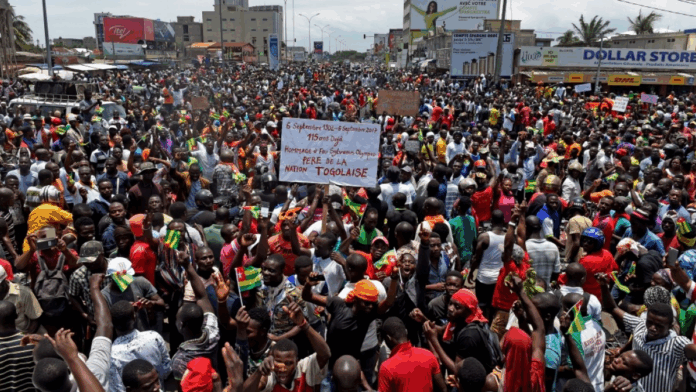
From June 26 to 28, demonstrators who took to the streets of Lomé, Togo, to oppose constitutional changes that could allow President Faure Gnassingbé to remain in power indefinitely became victims of a violent crackdown by Togolese security forces.

A similar crackdown was meted out to demonstrators who hit the streets three weeks earlier to make the same demands.

These brutal attacks against Togolese expressing their concerns through protests, coupled with instances of arbitrary arrests of activists, and repressive acts by the Togolese police, reflect the repressive environment in Togo, which continuously contracts the civic space and curtails civil liberties, according to the Media Foundation for West Africa.

The organisation condemned the violent repression of civilians during the recent protests in Togo and demanded accountability from the authorities.

MFWA said it was “deeply alarmed” by the violent repression of peaceful demonstrations held in Lomé, Togo.

Amid a particularly tense political climate, marked by the controversial adoption of a new constitution, citizens have mobilised to denounce what they see as yet another power grab by Gnassingbé. The protests were initiated by opposition voices, civil society groups and some cyber activists.

These demonstrations followed earlier protests on June 5 and 6, which were also met with arrests. Despite this, citizens rallied once again to make their voices heard.

On June 24, ahead of the planned demonstrations, the Togolese government issued a stern warning, declaring the protests illegal. A presidential adviser emphasised that “any demonstration must be submitted to the competent authorities,” and noted that the planned gatherings had not been authorised.

On June 26-28, protests took place in several neighbourhoods across Lomé. Initially peaceful, the demonstrations were quickly and violently dispersed. Security forces, reportedly aided by plainclothes militia, used brutal force. Many unarmed protesters were beaten, and numerous bystanders and residents were arrested without legal justification.

The human toll is devastating, with seven people confirmed dead. On the morning of June 27, two brothers, aged 22 and 25, were found in the Fourth Lake in the Akodessewa neighbourhood. According to their sibling, the young men had gone missing during the night of June 25–26 after attending an event.

Later that day, three more bodies were discovered in the Bè Lagoon. Witnesses and initial reports indicated injuries consistent with the use of live ammunition. Among the victims were a 16-year-old boy who had just passed his junior secondary school exam, and a public latrine attendant who was shot while trying to help a wounded child.

Two additional bodies were found on June 28 in the Nyekonakpoé Lagoon, bringing the total death toll to seven. More than 60 people were arrested, and dozens were injured.

In response to the public outcry, Togolese authorities denied any wrongdoing. Instead, the government accused “foreign-based actors” of attempting to destabilise the country through disinformation and incitement to violence. Officials claimed that public order had been ‘professionally’ restored and promised to prosecute the protest organisers, including those living abroad.

The government dismissed reports of excessive force and fatalities as politically motivated fabrications.