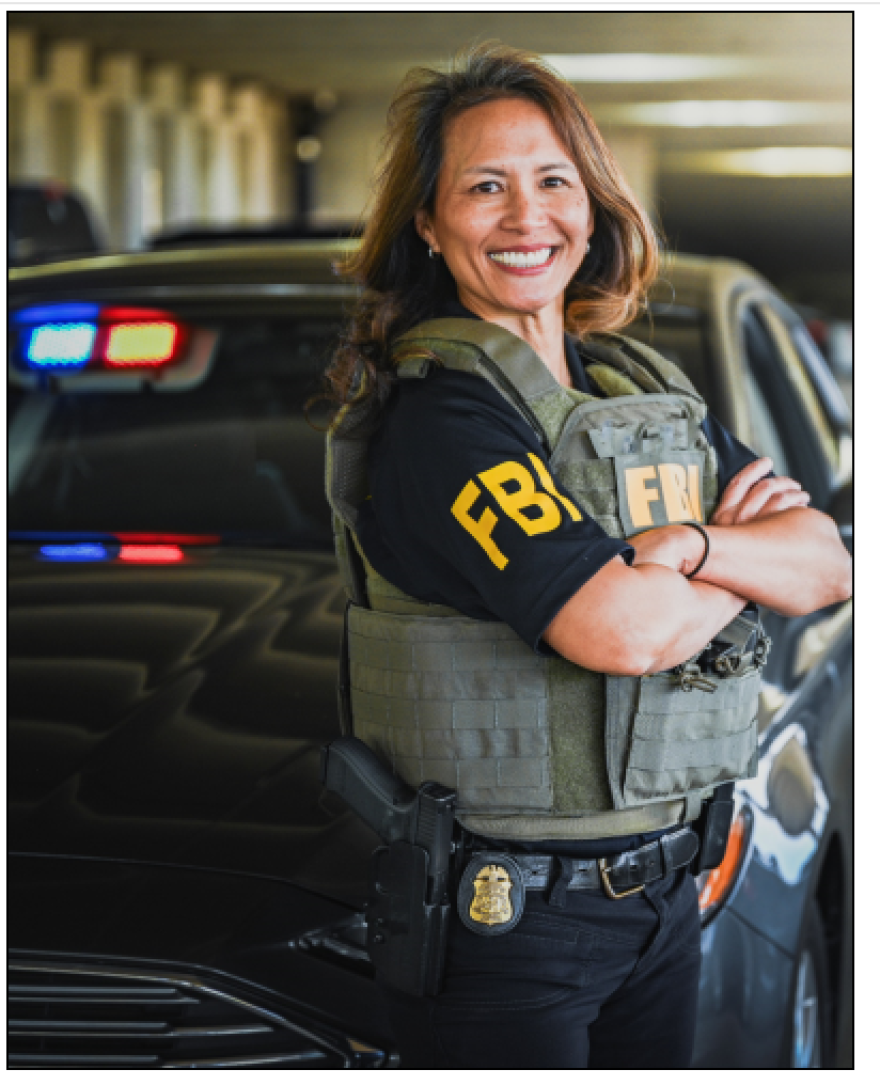
The FBI and local law enforcement partners are investigating a surge of armed robberies, known as ‘jugging’ crimes, at financial institutions in Maryland.
At least 21 bank and ATM customers have been victimised by these crimes just in the first week of July.
A majority of the crimes have taken place in Anne Arundel and Prince George’s Counties.
‘Jugging’ refers to a crime in which a suspect, or group of suspects, targets customers believed to have large amounts of cash. The perpetrators either rob customers while in the parking lot of a bank, credit union, or ATM or follow them to their next location.
So far in 2024, the FBI Baltimore Field Office has received reports of around seven dozen jugging offences with more than half of those incidents reported in June and July.
“These assailants are brazenly targeting bank and ATM customers, posing a significant risk to the public of both physical and financial harm. FBI Baltimore’s Violent Crime Task Forces and our partners are working together to combat the alarming rise of these dangerous incidents,” said FBI Baltimore Special Agent in Charge William J. DelBagno. “We will continue to pursue criminals with all our available resources and remain determined to eradicate violent crime from our streets.”
“The Anne Arundel County Police Department is grateful for the assistance of our federal, state, and local partnerships as we focus intently on the violent criminals involved in the wave of armed robberies being committed against our innocent, hardworking community members throughout the region,” said Anne Arundel County Chief of Police Amal E. Awad.
Awad added, “The perpetrators of these violent robberies, known as ‘juggings’, prey on people who are trying to live out their daily lives peacefully. We will continue to dedicate the necessary resources to prevent these criminals from attacking innocent people and when they do, diligently and relentlessly use our investigative techniques to identify, arrest, and bring them to justice.
“We share in the outrage of the many people and their families who have survived these terrifying encounters left feeling victimized, broken, and traumatized at the hands of these heartless, lawbreaking criminals.”
“The Prince George’s County Police Department truly values our partnership with both the FBI Baltimore Field Office and local agencies on this regional issue. Our detectives regularly communicate with these law enforcement partners to share real-time information on these investigations which often cross jurisdictional borders,” said Deputy Chief Zachary O’Lare, Bureau of Investigation Prince George’s County Police Department. “Together, we intend to identify and arrest all criminals targeting victims who are simply stopping at a bank. This issue is a top priority.”
“The Bowie Police Department is committed to collaborating with federal, state, and local law enforcement agencies to identify and apprehend those responsible for these criminal acts,” said Bowie Police Chief Dwayne A. Preston.
1896:The International Association of Chiefs of Police (IACP) established the National Bureau of Criminal Identification to compile and exchange criminal identification data.
1902:The first known systematic use of fingerprints in the United States was installed by DrHenry P. DeForrest to prevent applicants from having better-qualified persons take their tests. This was established with the New York Civil Service Commission.
1904:The United States Penitentiary at Leavenworth, Kansas, adopted the fingerprint system. John Ferrier and Major M.W. McClaughry began fingerprinting all inmates at the federal prison. These fingerprint records became the beginning of the U.S. Government’s fingerprint collection.
1924:Establishment of the FBI’s Identification Division by Acting Director J. Edgar Hoover. Fingerprint files from Leavenworth prison and the National Bureau of Criminal Identification were consolidated, totalling 810,188.
1933:The Civil Identification Section was established within the Identification Division. The United States Civil Service Commission turned over more than 140,000 fingerprint cards of government employees and applicants.
1933:A Latent Fingerprint Section within the Identification Division was established. Specialized technicians make technical examinations of latent or inked prints.
1944:The Identification Division grew so large it had to be moved to a federal armoury larger than a football field.
1958:The Identification Division received its 150 millionth fingerprint, submitted by a Boy Scout for his merit badge.
1972:The prototype automatic fingerprint reader, called FINDER, was delivered and installed at the FBI. FINDER was set to be used by the Identification Division in daily production operations to duplicate human technician’s visual and mental processes.
1983:The Identification Division completed the conversion of its criminal fingerprint searching from manual to automated searching. This allows the division to perform computerized fingerprint searches on virtually all the fingerprint cards it receives.
1990:Congress appropriates $185 million for the first three years of Identification Division’s Revitalisation & Relocation (R&R) Project funding. FBI Director Sessions and Robert C. Byrd determine that West Virginia is the best new location for the Identification Division.
1992: The Criminal Justice Information Services Division (CJIS) forms within FBI Headquarters alongside the Identification Division. The Latent Fingerprint Section (Disaster Squad) gets realigned with the Laboratory Division from the Identification Division. Three hundred employees are hired to work at CJIS Complex in West Virginia.
1997:The CJIS Wide Area Network (WAN) was installed in all 50 states, and the backlog reached 2.9 million fingerprint cards, an all-time high.
1999:Integrated Automated Fingerprint Identification System (IAFIS) becomes operational, and the Bureau identifies its one-millionth fingerprint transaction.
2000:The FBI’s Flyaway teams acquire the technical capability to capture remote locations internationally and submit them electronically into IAFIS.
2004:Department of Defense leadership authorises a biometric identification system as a pilot effort. Thus, the Automated Biometric Identification System (ABIS), which stores, searches and matches biometric data, was born. ABIS was modelled after the development of theNext Generation Identification System.
2007:CJIS Division provides its first records testimony in a court of law. In this landmark case, an FBI fingerprint examiner provided expert witness testimony in the case ‘State of Illinois v. Cornell Drapes’. Cornell Drapes, on trial for murder in Chicago, was convicted based on this expert testimony.
2013:The National Palm Print Service (NPPS) is established, dramatically improving law enforcement access to palm prints previously stored within local, state, tribal, and federal databases.
2014:The FBI announced its Next Generation Identification (NGI) System had achieved full operational capacity. The NGI System expanded the Bureau’s biometric identification capabilities, ultimately replacing IAFIS while adding new services and capabilities.
2015:The FBI dedicated its new 360,000-square-foot Biometric Technology Center (BTC), located on the campus of the Criminal Justice Information Services Division in Clarksburg, West Virginia. The BTC facility enables the CJIS Division to advance biometric technologies.
2017:A fingerprint image taken from a digital photograph was submitted to the NGI System from the Texas Department of Public Safety. The search produced an investigative lead and helped solve a child exploitation case of a predator who was taking and sharing child pornography.
2019:The NGI Interstate Photo System grows to 93 million civil photos, criminal photos, scars marks and tattoo images. Of this number, over 38 million criminal photos are available for facial recognition searching by law enforcement agencies.
2020:The NGI Iris Service reached full operational capability following a robust and successful pilot program. The iris image repository contains 1.38 million enrollments submitted from federal, state, and local databases.
2023:NGI Missing Persons Services was launched to provide fingerprint-based information to identify unknown decedents and resolve missing person cases.
2024:The National Palm Print Service repository maintains more than 30 million unique palm print identities and more than 66 million individual palm prints tied to those identities.
When someone sends the FBI a digital request for a fingerprint comparison from anywhere in the country, they usually receive a response within seconds. That’s no small feat given that the bureau’s Next Generation Identification System, or NGI, contains more than 161 million fingerprint records.
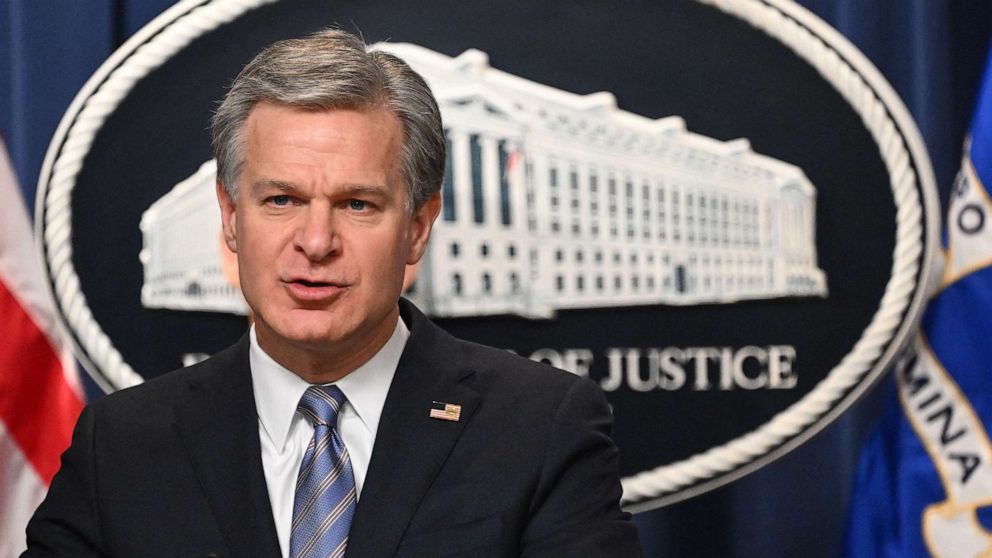
“It’s no wonder the NGI System is renowned as such a vital tool among our law enforcement partners everywhere—not just with state and local departments across the country, but also among our international partners throughout the world,” said FBI Director Christopher Wray during a ceremony marking a century since the bureau established a central fingerprint repository to help the country’s law enforcement agencies identify and capture criminals.
The NGI System is housed and managed by the FBI’s Criminal Justice Information Services (CJIS) Division on a secure campus three hours west of Washington, D.C., in Clarksburg, West Virginia.
Director Wray joined past and present CJIS leaders, lawmakers, FBI staff, and dozens of retired fingerprint examiners at the July 10 event, which celebrated 100 years since the Bureau established its Identification Division on July 1, 1924. The new division consolidated 810,000 fingerprint files from the United States Penitentiary in Leavenworth, Kansas, and the National Bureau of Criminal Identification, which had been the keeper of crime data for the International Association of Chiefs of Police since 1896.
Wray described the history of fingerprint technology in investigations spanning a century.
“I’m proud that we’ve maintained that focus on growing our capabilities because there’s simply no other way to remain as effective as a law enforcement and intelligence agency when the threats are as dynamic and evolving as they are today,” Wray said.
He also highlighted the introduction of new biometric modalities—like facial recognition, palm prints, and iris scans—as innovations that will help the FBI and its partners better carry out their missions into the future. NGI’s National Iris Service, for example, allows users like police and prison staff to enroll iris images without physical contact, linking a subject’s irises to their respective fingerprint records. “You want to talk about the textbook illustration of innovation,” Wray said.
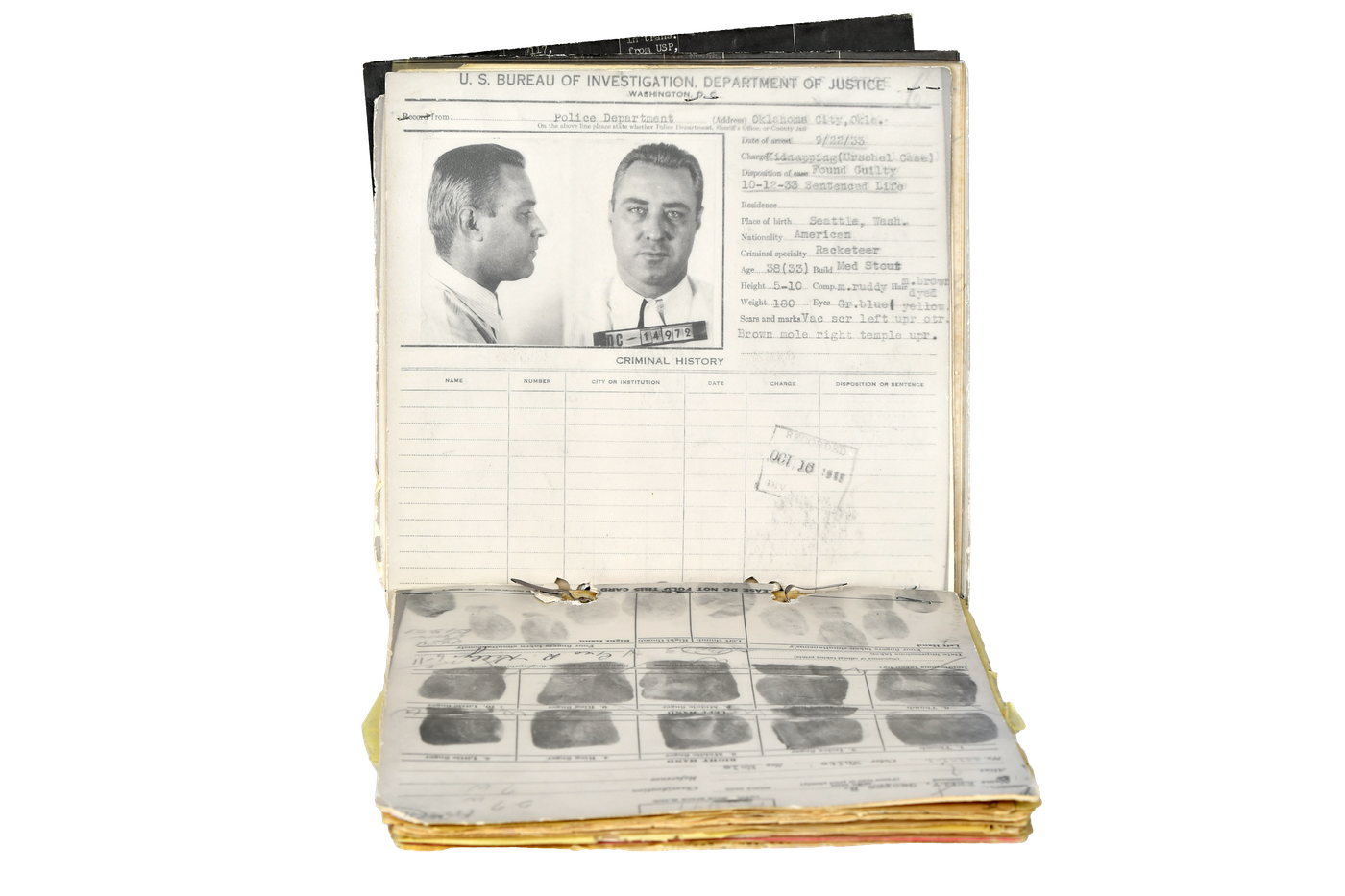
To help mark the occasion, artifacts spanning the fingerprint repository’s century-long history were on display for visitors. Items included vintage fingerprint cards, magnifiers, and the colored pencils that fingerprint examiners have used for generations. And a gallery of images illustrated the progression of fingerprint technology—from taking impressions with ink rollers and paper cards to the digital mobile devices that many agencies use today.
“This anniversary highlights the evolution of the biometrics program within the FBI,” said Tim Ferguson, acting assistant director of the CJIS Division. “It’s amazing to me that we had the same type of fingerprint index from 1924 until 1999, where you would have hundreds of file cabinets in a warehouse with fingerprint cards that required all the manual identification and comparisons.”
Up until the turn of the century, in fact, the role of fingerprint examiners changed very little. When a set of fingerprints arrived for comparison to the millions on file, examiners—using a special cataloging system—hunted through rows of filing cabinets to find the right cards to compare against.
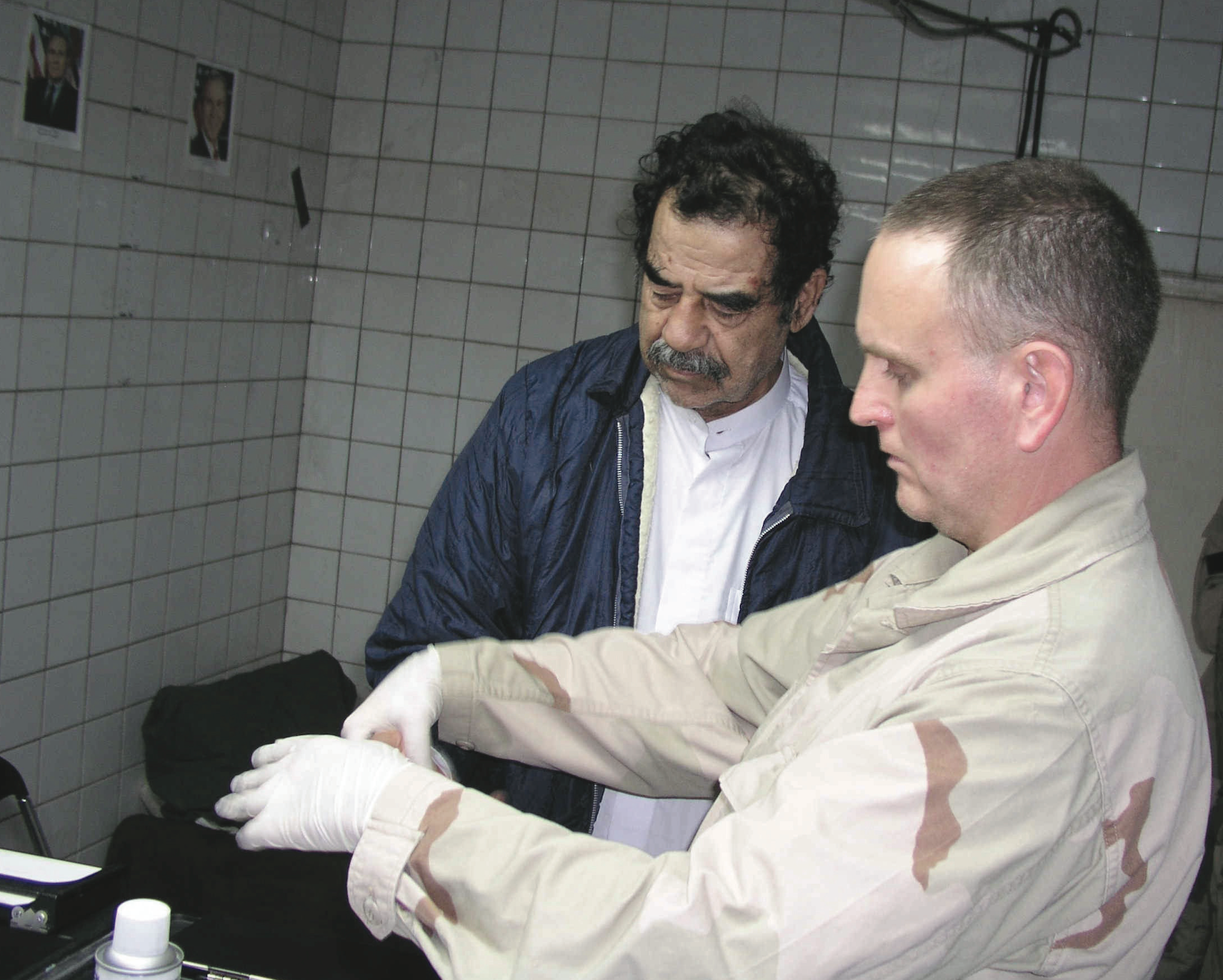
For more than 100 years, fingerprints have been used to help make positive identifications. The investigation of Frank Grigware in 1910 was one of the young Bureau’s first and longest-running cases. An FBI agent fingerprinted former Iraq leader Saddam Hussein after he was pulled out of his spider hole on December 13, 2003.
“It was a manual process,” said David, a supervisory management and program analyst at CJIS. David’s FBI career started in 1988 as a fingerprint examiner at FBI Headquarters before the CJIS Division moved 450 employees to its new campus in West Virginia in 1995. In those early days, he said, “everything was paper.”
Hundreds of fingerprint examiners worked in shifts 24 hours a day to keep up with an ever-growing number of requests. “When I came into the picture in 1988, it took us a month, sometimes longer, to respond to a fingerprint check,” David said. “It took a very long time because of a backlog and how long it took to do that manual process. Today, we do it in seconds.”
In 1999, the implementation of the Integrated Automated Fingerprint Identification System (IAFIS) heralded the era of digitized fingerprints at the FBI. Millions of paper cards were digitally scanned and made accessible via computers. This gave examiners more efficient tools to do manual examinations.
The end of the 20th century marked the beginning of the end of paper fingerprint cards. Tens of millions of cards were digitized for more efficient processing and identifications.
In fiscal year 2023, manual examinations by CJIS personnel made up just 3% of requests—or two million entries. Most comparisons are made automatically. Last year alone, CJIS received and processed 74 million fingerprints. Earlier this year, CJIS registered its one-billionth electronic transaction.
“Ninety-seven percent of the fingerprints we get into our system are automated,” Ferguson said. “It’s almost an immediate response back to our local, state, and private partners when requests are made.”
For the more than 600 personnel in CJIS’s Biometric Services Section, processes have changed, but the mission hasn’t.
“In terms of the fingerprint examiner’s role, the work was the same in that your training, experience, and skill at comparing fingerprints did not change,” David said. “What changed were the tools you had to accomplish that comparison.”
In 2014, NGI replaced IAFIS and expanded the number of biometric modalities well beyond fingerprints to include irises, palm prints, tattoos, scars, and marks. “Whereas the fingerprints will always be the staple and backbone of identification, we’re always looking for ways to revolutionize the way we identify individuals,” Ferguson said. “One of the things we’re focusing on when it comes to technology and advancement in biometric services and identification modalities is how can we assist the local police officer, the local detective, the FBI agent that’s on the street to conduct criminal and counterterrorism investigations, and provide those services in real time.”
The FBI manages DNA—another highly accurate identification modality—separately at the FBI Laboratory in Quantico, Virginia, through the Combined DNA Index System (CODIS). CODIS contains DNA profiles contributed by federal, state, and local participating forensic laboratories. CODIS was designed to compare a target DNA record against the DNA records contained in the database—much like the NGI System does with fingerprints.
The ceremony at CJIS included dozens of retired fingerprint examiners, some of whom spent their entire careers navigating cavernous warehouse spaces full of cabinets and fingerprint cards, quietly making the indisputable connections that helped close cases.
“I’m really excited for them to see how far it’s come and to see what we’re doing now with technology,” said David, the former fingerprint examiner.
Wray said the centennial anniversary is a tribute to the generations of FBI employees who kept pushing the Bureau forward.
“They’ve shown us that, while our adversaries can be, at times, formidable, working with our partners across law enforcement, we—the good guys—can be unstoppable,” Wray said. “And I believe that if we continue on this road, with an enduring commitment to innovation and our partnerships, we’ll stay on the cutting edge of criminal justice technology.”
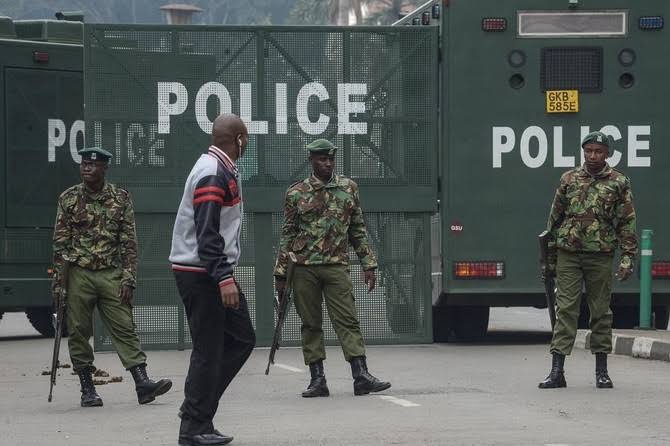
A suspected 33-year-old serial killer has been arrested, say the police in Kenya.
His arrest, the police said, was in connection with the discovery of mutilated women’s remains at a rubbish dump in Nairobi.
According to the police on Monday, the suspect was arrested Sunday evening while watching the Euro 2024 final between England and Spain in a pub.
The police disclosed that the man confessed to murdering 42 women, dismembered them and put their remains in plastic bags before throwing them into a former quarry in a Nairobi neighbourhood.
“We are dealing with a psychopath, a serial killer with no respect for human life,” said Mohamed Amin, the head of the criminal investigation department.
The investigation began last Friday after body parts were found at the dump, said the police.
By Sunday, the police had found the remains of nine women aged between 18 and 30. The suspected serial killer claimed that his first victim was his wife, police told journalists.
The 33-year-old reportedly confessed to strangling his wife and dismembering her. He then went on a killing spree, hunting down other women.
The police explained that the suspect was tracked down via the mobile phone of his last victim.
He reportedly lived just 100 metres away from the dump.
In addition to a machete and plastic bags, the personal belongings of his alleged victims were also found in his house.
At the time of his arrest, the suspect was reportedly already looking for his next victim.
On July 11, 2024, the NCA obtained a recovery order over funds totalling £1,079,000 from bank accounts argued to have been used as part of an international money laundering network.
This was the final element of a civil recovery investigation which focussed on assets of Gregory Candy-Wallace, which the NCA argued were being used by an organised crime group diverting Pay as You Earn (PAYE) and National Insurance Contribution (NIC) payments away from HMRC.
In December 2020, the NCA submitted to the court how the organised crime group had diverted more than £50 million of PAYE/NIC payments away from HMRC by offering outsourcing services to third-party companies but then failing to pay the appropriate sums to HMRC. These funds were initially moved through a complex network of UK accounts, with the majority of the funds then moved to accounts held in Hong Kong and Taiwan.
The case was due to go to trial at the high court this month, but on June 19, 2024, a settlement was reached with Mr Candy-Wallace and the companies he controlled. The NCA recovered a residential property near Eastbourne valued at approximately £1.7 million held in the name of an offshore company incorporated in the British Virgin Islands, and the balances of five further UK company bank accounts totalling approximately £1.2 million.
Two further settlements had previously been reached with companies whose bank accounts had been used as part of the money laundering network: Foxton Wren Ltd and Moneo Solutions Ltd. A combined sum of approximately £1.7 million was recovered from these companies, bringing the total value of assets recovered due to this investigation to approximately £5.8 million.
Adrian Searle of the National Economic Crime Centre at the NCA said, “The abuse of UK and offshore company accounts to facilitate money laundering represents a significant threat to the UK economy, adding costs to our financial system and threatening the UK’s reputation as a world financial centre. The NCA uses all the powers at its disposal, both criminal and civil, to pursue the laundered assets and bring those involved to justice.”
A terrorist who used social media platforms such as TikTok to encourage terrorism has been jailed for four years. Hamza Alam, 22, disguised himself before posting videos on TikTok.
A number of his posts included hostile references to Jewish people alongside a video that encouraged viewers to attack and kill Jews following the Gaza and Israel conflict. Another post celebrated the 9/11 attacks.
One of his TikTok accounts, which was public, had 126 videos that had amassed 31,000 likes.
Alam also created a shareable folder which included Islamic State propaganda and videos containing images of public floggings.
Today at Woolwich Crown Court, he was sentenced to four years’ imprisonment and a further year on licence thereafter. He was previously found guilty of three counts of disseminating a terrorist publication and one count of encouraging terrorism following a trial at the same court, which concluded in April.
Following an investigation by the Metropolitan Police’s Counter Terrorism Command into a Telegram discussion group, where Alam had been one of its main contributors, he was arrested on 29 June 2022.
His phones were seized, and investigators were able to uncover photographs in which his face had been superimposed onto Islamic State fighters, as well as warnings from TikTok moderators saying there had been multiple breaches of community guidelines – and that further breaches could result in account penalties.
Bethan David, Head of the Crown Prosecution Service’s Counter Terrorism Division, said, “Hamza Alam used social media platforms, including TikTok, to discuss, share and spread his vile extremist views. He also recklessly shared material that glorified the commission, preparation and acts of terrorism.
“Alam thought that by disguising his appearance and claiming he was merely an online librarian, he would not be caught out – but he was wrong. The prosecution case included mobile phone evidence, including TikTok videos and a clear warning from TikTok moderators to his account.
“Posting such extreme and illegal material online poses a high risk of serious harm to the public through encouraging and inciting others into extremist activity, and it is only right that Alam has been brought to justice today. The CPS will always seek to prosecute such appalling online criminal behaviour to keep the public safe.”
The President of the African Development Bank Group Dr Akinwumi Adesina, has said the decision by Nigeria’s President Bola Tinubu’s government to allow massive food importation risks destroying the country’s agriculture.
This follows the announcement by Nigeria’s Minister for Agriculture Abubakar Kyari on July 10 that the federal government would suspend duties, tariffs, and taxes on the importation of maize, husked brown rice, wheat, and cowpeas through the country’s land and sea borders, for 150 days.
“Nigeria’s recently announced policy to open its borders for massive food imports, just to tackle short-term food price hikes, is depressing,” Adesina told African Primates of the Anglican Church at a retreat in Abuja, Nigeria, on Friday.
He warned that the policy could undermine all the hard work and private investments in Nigeria’s agriculture sector.
“Nigeria cannot rely on the importation of food to stabilize prices. Nigeria should be producing more food to stabilize food prices while creating jobs and reducing foreign exchange spending, that will further help stabilize the Naira,” said the African Development Bank president.
“Nigeria cannot import its way out of food insecurity,” he said, “Nigeria must not be turned into a food import-dependent nation.”
Speaking on the theme ‘Food security and financial sustainability in Africa: The role of the Church’, Adesina said Nigeria “must feed itself with pride,” warning, “a nation that depends on others to feed itself, is independent only in name.”
Faith and food security
The clergymen assembled in Abuja under the umbrella of the Council of Anglican Provinces of Africa (CAPA), representing more than 40 million Anglicans across the continent.
In his opening remarks, the host, His Grace the Most Reverend Henry C. Ndukuba, Primate of the Church of Nigeria (Anglican Communion), said the gathering was a unique opportunity for African Anglican leaders to deepen bonds of friendship and collaboration and to share collective wisdom and experiences.
The event’s chairperson, Emeritus Nigerian Professor of Science Education Olugbemiro Jegede, told Adesina: “You have the whole of Africa represented here. Every Primate represents a region. Behind these Primates are millions and millions of Anglicans who are listening to us here.”
Noting that Africa accounts for nearly a third of the more than 780 million people worldwide who are hungry, the African Development Bank president said agriculture is critical for the diversification of economies and for the transformation of rural areas, where over 70 per cent of the population of Africa live. “It is clear, therefore, that unless we transform agriculture, Africa cannot eliminate poverty,” he insisted.
Adesina said Africa has 65 per cent of the uncultivated arable land left in the world to feed 9.5 billion people by 2050. Therefore, what Africa does with agriculture will determine the future of food in the world. “Essentially, food is money. The size of the food and agriculture market in Africa will reach $1 trillion by 2030.”
Transformational strides
Adesina briefed the Primates on the AfDB’s $25 billion program to transform agriculture by providing high-performing agricultural technologies for 40 million farmers and making Africa food self-sufficient by 2030.
He shared the bank’s successes in helping member countries tackle the negative effects of climate change through financial investments and its flagship Technologies for African Agricultural Transformation (TAAT) programme.
According to the AfDB president, TAAT has helped Ethiopia to become a net exporter of wheat within five years, and it has significantly increased Sudan’s wheat production, as well as supported countries in Eastern and Southern Africa to continue producing food in the face of a prolonged drought.
For Nigeria, Adesina said, “Together with the Islamic Development Bank and the International Fund for Agricultural Development, we have provided $520 million to support the establishment of Special Agricultural Processing Zones, which will allow private agribusinesses to establish industries that process and add value to agricultural commodities.”
In addition, the bank provided $134 million to Nigeria for emergency food production to help drive down food price inflation by significantly boosting the local production of wheat and cassava under the National Agricultural Growth Scheme.
Adesina urged the Nigerian government to take advantage of the Bank’s investments and support for African farmers, show greater determination and commitment to achieving food self-sufficiency, and incentivize private-sector agribusinesses.
To support Africa’s ambitions to move up the global agricultural value chains, the African Development Bank Group and its partners are supporting the development of 28 Special Agro-Industrial Processing Zones (SAPZs) l in 11 countries, with $4.5 billion mobilised so far.
Speaking on behalf of the chairman of the Council of Anglican Provinces of Africa and Bishop of Northern Zambia, Albert Chama, the Archbishop of the Anglican Church of Kenya, Dr Jackson Ole Sapit, called for greater cooperation between the AfDB Group and the Anglican Church.
“The African mind must be at the centre of solving African problems. If the African Development Bank mobilises resources for the African continent, and the Church also mobilises resources for holistic transformation, we can achieve a lot working together – and make a difference,” Ole Sapit said.
The church as a change agent
Proposing solutions for agriculture in Africa, Adesina said the world desperately needs “visionary and passionate leaders who are strategic solution providers and transformational change makers.”
This includes, he said, public advocacy for robust government policies to end hunger and malnutrition, complemented by church-led food banks and other social protection programs for the poor and needy; investing in commercial farms, especially in rural areas; advocacy on issues of climate change; supporting and encouraging young Africans to engage in agricultural entrepreneurship; and demanding greater financial accountability, public probity, and better financial management from governments.
Slync founder Christopher Kirchner was sentenced today to 20 years in federal prison for defrauding investors of tens of millions of dollars, announced U.S. Attorney for the Northern District of Texas Leigha Simonton.
Kirchner, 37, who founded supply chain management software company Slync in 2017 and held the position of CEO until his termination by the board of directors in 2022, was initially charged in February 2023.
Just 11 months later, a jury convicted him of four counts of wire fraud and seven counts of engaging in monetary transactions in property derived from specified unlawful activity. He was sentenced Thursday to 240 months in federal prison by U.S. District Judge Mark Pittman, who also ordered him to pay more than $65 million in restitution.
“Even as his company was circling the drain, Chris Kirchner was spending millions of his investors’ money on himself. Apparently, projecting personal prosperity was more important to him than making payroll,” said U.S. Attorney Leigha Simonton. “His duplicity earned him 20 years in prison. We are proud to hold him accountable for his crimes and are committed to pursuing all businesspeople engaged in criminal conduct.”
“Mr Kirchner fraudulently raised money from investors and embezzled those funds from the company he led to fund a lavish lifestyle. Today’s sentence underscores the gravity of those crimes. He acted without any regard for how it would affect the company, employees, or investors,” said FBI Dallas Special Agent in Charge Chad Yarbrough. “The FBI is committed to working with our partners to investigate any allegation of financial misconduct. We will hold individuals accountable who use their positions of trust for personal profit.”
According to evidence presented at the sentencing hearing, between 2020 and 2022, Kirchner fraudulently raised more than $71 million from numerous investors based on false representations and promises about Slync’s business operations, false representations about Slync’s financials, false representations about Slync’s customers, and fantastical revenue projections. As the jury’s verdict indicated, Kirchner then misappropriated over $25 million of the investor funds in various ways.
Between April 2020 and March 2022, Kirchner initiated nearly 100 wire transfers, moving money from Slync’s Silicon Valley Bank account into the company’s account at JPMorgan Chase Bank – an account only he could access.
He then wired much of the money from the Chase account to his personal bank accounts. In addition, Kirchner wired $20 million directly from Slync’s Silicon Valley Bank account into his personal checking account.
Kirchner then used the misappropriated funds to buy, among other things, a $16 million private jet, a suite at AT&T Stadium, exotic vehicles, including a Rolls Royce and Mercedes Benz G-Class, and jewellery including a $500,000 Richard Mille watch, several Rolex watches, and a Cartier necklace.
When Slync, drained of funds, struggled to make payroll in the spring of 2022, Kirchner attempted to replace some of the money he had misappropriated by convincing at least four investors to wire approximately $850,000 to Slync as part of a purported Series C investment round. Slync’s board of directors never authorised a Series C investment round.
In the meantime, Kirchner offered various explanations for Slync’s payroll issues – all of which were untrue. Kirchner also fired a Slync employee after the employee reported to the board of directors that Kirchner may have falsely exaggerated Slync’s financial performance to investors.
Immediately following his suspension by the board of directors in late July 2022, Kirchner removed certain IT administrator privileges from key Slync employees, preventing the employees from accessing Slync’s computer systems. He then attempted to delete approximately 18 gigabytes of Slync data, including emails.
Charles Price, 66, of Lanham, MD, was found guilty by a jury on July 8, 2024, of assault with a dangerous weapon and possession of a firearm during a crime of violence.
The verdict, announced by U.S. Attorney Matthew M. Graves and Chief Pamela A. Smith of the Metropolitan Police Department (MPD), follows a three-and-a-half-day trial in the Superior Court of the District of Columbia.
Errol Arthur scheduled sentencing for September 12, 2024. Price faces a mandatory minimum sentence of five years in prison.
According to the evidence and testimony presented at trial, on March 30, 2022, the victim was delivering an UberEATS order when he attempted to shift into the left lane but noticed a white Mercedes blocking his attempts to get over. Eventually, the victim could shift into the lane and get in front of that vehicle.
However, the victim noticed that the white Mercedes driver, Price, was tailgating and following him. The victim became afraid and made a U-turn at 3rd and K Street NE to get away from the vehicle driven by the defendant.
After making the U-turn, the victim was stopped at a red light when Price walked up to his vehicle and pointed a gun at his head.
Eight men from Maine and one from New Hampshire – comprised of the owner, captains, and crew members of a commercial fishing vessel, the Western Sea, and owners of local Maine fisheries – have been sentenced for knowingly subverting commercial fishing reporting requirements.
U.S. District Judge Jon D. Levy handed down the final six sentences in the complex case in U.S. District Court in Portland.
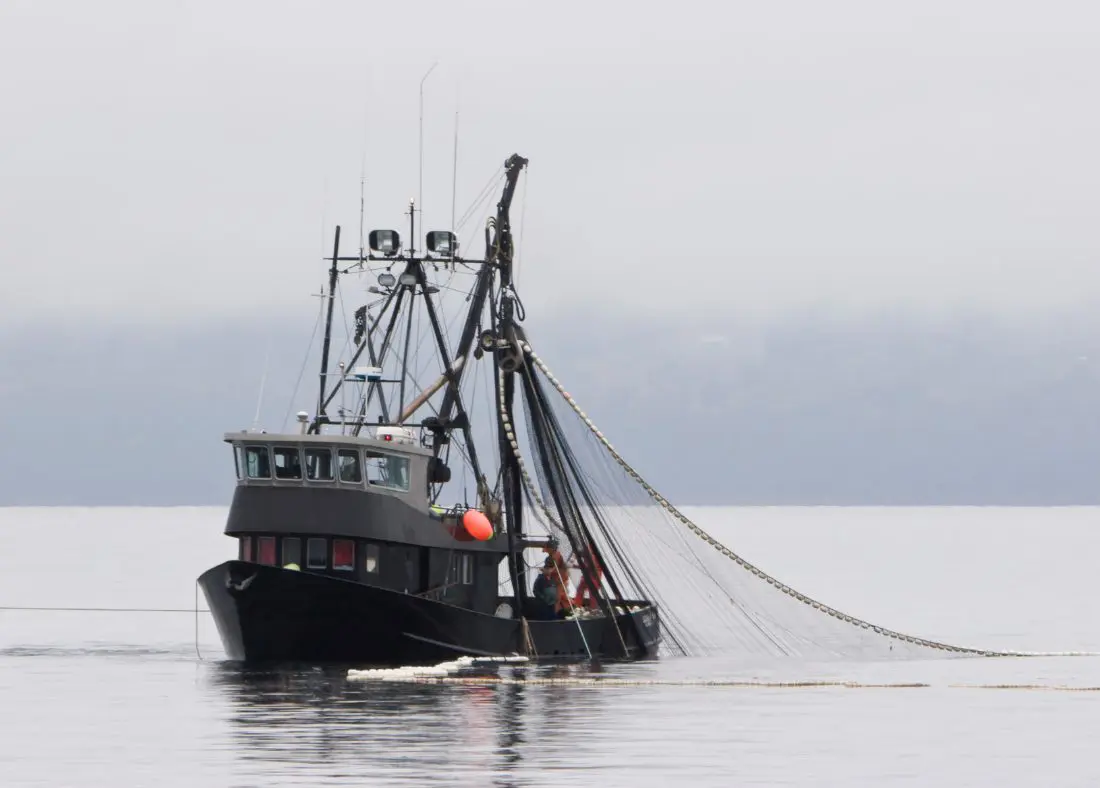
The Western Sea is a fishing vessel operated out of Rockland and fished for Atlantic herring. Atlantic herring is the primary bait fish for Maine’s lobster industry. Operators of fishing vessels in the Atlantic herring fishery must comply with restrictions on fishing areas, seasonal access, gear usage, and limits on the quantity or weight of fish caught.
To ensure a sustainable fishery for a particular species, the National Oceanic and Atmospheric Administration (NOAA) has the authority to set quotas and catch limits for commercial fishing vessels. The vessels must complete a Fishing Vessel Trip Report (FVTR) at the end of each fishing trip, reporting all species caught, the weight of each catch, and the dealers to whom the catch is sold.
According to court records, from June 2016 through September 2019, members of the Western Sea crew conspired to submit false FVTRs to NOAA. The Western Sea, acting through its owner, captains, and crew, sold Atlantic herring to purchasers who paid the crew directly via check or cash, including to some purchasers who were not federally permitted dealers of Atlantic herring.
Crew members received shares of this money at the end of fishing weeks. Some sales were of unreported Atlantic herring, including when the vessel landed more than the quantity of herring allowed under weekly catch limits. False FVTRs were submitted to NOAA to conceal the conduct, and Western Sea, Inc. issued inaccurate 1099 forms to crew members who failed to report all income.
Sentenced last week:
Glenn Robbins (77, Eliot; owner Western Sea, Inc. & Captain R. Herring; Captain of the Western Sea)
Pleaded guilty on 03/11/24 to conspiracy to submit false information to the U.S. Department of Commerce Secretary and his/her designees regarding the catch and sale of Atlantic herring and failure to pay taxes.
Sentenced on 07/11/24 to 2 years of probation $25,000 fine.
Western Sea, Inc. (Eliot)
Pleaded guilty on 03/11/24 to falsification of records.
Sentenced on 07/11/24 to 2 years of probation, $175,000 fine.
Jason Parent (51, Owls Head; crew member)
Pleaded guilty on 03/11/24 to conspiracy to submit false information to the U.S. Department of Commerce Secretary and his/her designees regarding the catch and sale of Atlantic herring and failure to pay taxes.
Sentenced on 07/10/24 to 2 years of probation, a $2,000 fine, 50 hours of community service, and restitution of $28,685.58.
Stephen Little (59, Warren; crew member)
Pleaded guilty on 03/11/24 to conspiracy to submit false information to the U.S. Department of Commerce Secretary and his/her designees regarding the catch and sale of Atlantic herring and failure to pay taxes.
Sentenced on 07/10/24 to 2 years of probation, $42,834.93 restitution.
Neil Herrick (48, Rockland; crew member)
Sentenced on 07/10/24 to 2 years of probation, 50 hours of community service, $32,889.43 restitution.
Ethan Chase (46, Portsmouth, NH; Part-time captain of the Western Sea)
Pleaded guilty on 03/11/24 to conspiracy to submit false information to the U.S. Department of Commerce Secretary and his/her designees regarding the catch and sale of Atlantic herring and failure to pay taxes.
Sentenced on 07/09/24 to 2 years of probation, 50 hours of community service, a $2,000 fine, and $39,289.39 restitution.
Previously sentenced:
Glenn Lawrence (70, Owls Head; owner of fishing/transport vessel the Double Eagle)
Pleaded guilty on 11/07/23 to unlawful purchase of fish in interstate commerce and aiding and abetting (Lacey Act Violation).
Sentenced on 05/03/24 to 2 years of probation, a $9,500 fine, and 50 hours of community service.
Duston Reed (42, Waldoboro; owner of New Moon Fisheries, Inc.)
Pleaded guilty on 12/27/23 to unlawful purchase of fish in interstate commerce and aiding and abetting (Lacey Act Violation).
Sentenced on 04/29/24 to 2 years of probation, a $25,000 fine, and 100 hours of community service.
New Moon Fisheries, Inc. (Friendship)
Pleaded guilty on 12/27/23 to unlawful purchase of fish in interstate commerce and aiding and abetting (Lacey Act Violation).
Sentenced on 04/29/24 to 2 years of probation $15,000 fine.
Samuel Olsen (73, Cushing; Owner Sam’s Seafood LLC)
Pleaded guilty on 10/17/23 to unlawful purchase of fish in interstate commerce and aiding and abetting (Lacey Act Violation).
Sentenced on 04/12/24 to 1 year of probation, a $9,500 fine, and 50 hours of community service.
Andrew Banow (37, Rockport; Crew member)
Pleaded guilty on 03/14/24 to conspiracy to submit false information to the U.S. Department of Commerce Secretary and his/her designees regarding the catch and sale of Atlantic herring and failure to pay taxes.
Sentenced on 04/12/24 to 1 year of probation, $1,000 fine, $20,177 restitution.
“Atlantic herring is a vital resource in Maine, particularly to the thousands of people involved in the lobster industry in the state. Led by Glenn Robbins and Western Sea, the defendants, in this case, subverted regulations for the sole purpose of lining their own wallets – regulations that are in place to ensure Atlantic herring are not overfished and are available for future generations of fishermen and safeguard the viability of the marine ecosystem,” said U.S. Attorney Darcie N. McElwee. “I commend the investigators on this case, including those from NOAA, for their efforts to ensure the sustainable management of an industry so vital to all that is Maine.”
“Protecting our nation’s honest fishermen is, and will always be, a top priority for NOAA. Egregious acts that undermine the sustainable management of our fisheries resources and steal from those in the industry who follow the rules will not be tolerated,” said Michael Henry, Assistant Director for NOAA’s Office of Law Enforcement’s Northeast Division.
“The sentencing of all involved with the Western Sea investigations sends a powerful message to the commercial fishing industry,” said IRS CI Special Agent in Charge Harry T. Chavis Jr. “This investigation demonstrates IRS-CI’s commitment to investigating and prosecuting all those that violate the U.S. Tax Code, no matter who they are.”