Saturday, March 14, 2026
- Advertisment -
Google search engine
Home Blog Page 394

Police Launch Appeal for Witnesses After Shooting of Teenager in Southwark

0

Detectives are appealing for witnesses and footage after a boy was shot on Sumner Road, SE15.

Detective Inspector Ray Sekalongo, from the Met’s Specialist Crime Command, said, “I am very keen to hear from anyone who has information or footage relating to this incident.

“Removing guns from our streets is a priority for the Met. The injuries caused by guns are often devastating and the effects of being a victim of gun crime linger far beyond the healing of wounds.

“This was an attempt on the life of a 15-year-old boy and I know that there are people who can name the person responsible. Please help us take these weapons off the street by sharing what you know.”

Police were called by the London Ambulance Service (LAS) at 23:12hrs on Monday, July 15, to reports of an injured boy on Sumner Road in Southwark.

Officers from LAS and London’s Air Ambulance attended. At the scene, a 15-year-old boy was found with gunshot injuries. LAS took him to a south London hospital where his condition is not life-threatening.

Trident detectives are leading the investigation and are working closely with colleagues from the Central South Command Unit who police Southwark.

At this early stage, there has been no arrest.

A crime scene and cordons were established. These have since closed.

Another Child Dies in Napier Road House Fire in East Ham

0

Detectives have sadly confirmed that a child who was critically ill following a fire in East Ham has died in hospital.

Emergency services were called to a house on Napier Road at about 08:32hrs on Saturday, 13 July, following reports of a fire.

Officers attended alongside colleagues from London Fire Brigade and London Ambulance Service.

Sadly, one child was found dead inside the property. Another child was taken to hospital but tragically later died.

Two other people remain in hospital. A third person has been discharged and continues to be treated as an outpatient.

All six people are believed to be members of the same family, who lived at the house on Napier Road.

Enquiries are ongoing to identify and inform other family members. They will be supported by specially trained police officers.

Detective Chief Inspector Jonathan Burks, one of the senior officers responsible for policing Newham, said, “It is our incredibly sad duty to report that a third child died in hospital yesterday Monday, 15 July. This is news that I know will cause even more upset in what has already been a devastating incident for the local community and beyond.

“Our thoughts are with everyone who has been affected. I reiterate that we will do all we can, alongside LFB, the local authority and other partners, to provide the family and local community with support and answers to their questions.”

Officers are investigating the cause of the fire alongside London Fire Brigade colleagues. At this very early stage, there is no evidence to indicate suspicious circumstances. Enquiries are ongoing.

At Least Four People Killed in Shooting Near Mosque in Oman

0

At least four people were killed on Tuesday, and several others were wounded in gunfire near a mosque, Omani police said.

The attack took place early on Tuesday in Wadi al-Kabir, a district east of the capital city, Muscat, as Muslim Shiites were carrying out a religious ritual.

The police added that the security forces took the necessary measures to calm the situation.

Two Pakistanis were among the fatalities, the Pakistani embassy in the country said.

Oman, located on the Arabian Peninsula, is considered one of the safest countries in the Arab world and is popular with foreign tourists.

In a video purporting to show the incident, dozens of people can be seen fleeing the Imam Ali Mosque as the sound of repeated gunfire could be heard. It remained unclear whether one or more gunmen opened fire.

“The authorities are continuing to gather evidence and conduct investigations to uncover the circumstances surrounding the incident,” the police said on X, formerly Twitter.

Shiites across the Middle East are observing the 10-day Ashura ceremony, in which mainly Shiite Muslims commemorate the seventh-century battlefield martyrdom of Imam Hussein, the grandson of Prophet Muhammad.

Fraudster Nurse Tanya Nasir Convicted for Lying About Qualifications to Gain Employment As Senior Nurse in Neonatal Unit

0

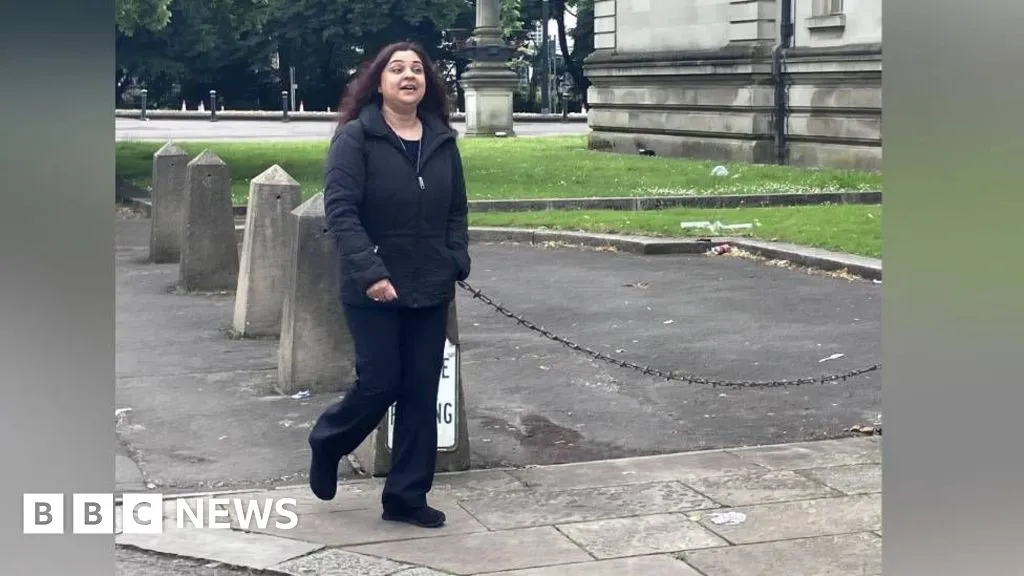
A woman who gave false information and lied about her qualifications when applying and interviewing for a job as a senior nurse at a Welsh neonatal unit has been found guilty today of fraud. 

Following a trial at Cardiff Crown Court, Tanya Nasir, 45, from Hertfordshire, was found guilty of nine charges, including fraud, using a false instrument with intent, possession of articles for use in fraud, and securing unauthorised access to computer material with intent. 

Gayle Ramsay of the Crown Prosecution Service said, “Tanya Nasir deliberately lied about her qualifications and employment history so that she could gain employment in a senior and sensitive nursing role where she would be entrusted with the responsibility of caring for newborn babies. 

“Nasir not only lied in respect of her own qualifications but also lied on behalf of others. In doing so she betrayed the trust of employers and colleagues, and showed a total disregard for the welfare and safety of vulnerable patients, putting their lives at significant risk.” 

The CPS prosecuted Nasir following an investigation by the NHS Local Counter Fraud Authority. 

Nasir’s deception began in 2010 when she failed to disclose a conviction whilst studying for a diploma in Higher Nursing Education from Buckinghamshire New University. This was a breach of the university’s fitness to practise policy. 

She gave the university a letter she had fabricated herself, claiming that it was from Hertfordshire Probation Service, which said she was not under any obligation to tell them about the convictions. This letter convinced the university to allow her to continue her studies. 

From February 2013 until October 2015, the defendant was employed as a Staff Nurse Assistant (effectively an unqualified nurse) at Hillingdon Hospital. Following her qualification, she worked briefly at Spire Bushey Hospital in Watford as a Band 5 Registered General Nurse before returning to Hillingdon until June 2019. 

In September 2019, Nasir was employed in the role of a Band 7 Ward Manager at the Neonatal Ward of the Princess of Wales Hospital, Bridgend. 

It was found that the information the defendant provided on her application forms for employment at the Princess of Wales Hospital and for two applications to Hillingdon Hospital were false. 

In January 2020, concerns were raised by her line manager at the Princess of Wales Hospital during a routine revalidation of her Nursing and Midwifery Council registration.

After further checks of Nasir’s application and CV, the line manager discovered inconsistencies with her references. Nasir was subsequently suspended from her post in February 2020, and the investigation commenced, which discovered anomalies with the defendant’s qualifications. 

In her application, she claimed she had qualified as a nurse and had become registered with the Nursing Midwifery Council in 2010. However, officers confirmed with the university that she did not qualify until 2014. 

Further checks were made with four other universities she claimed to have obtained qualifications from. Three confirmed she never attended, and the fourth confirmed that she did attend but did not have any record of being awarded one of the qualifications outlined in her application. 

Previous employers listed were also contacted. Many of them confirmed that Nasir was either not employed in the role she claimed to have worked in or that they had never employed her in any capacity. 

In all three applications, Nasir claimed she had served in the military. She said that she had been shot twice whilst deployed overseas. The investigation found that she had never been in the army or the army reserves.  

She joined the Cadet Force in November 2013 but was discharged and struck off in May 2016.  She was never deployed in active combat or conflict. 

When applying for a role at Hillingdon Hospital in 2015, one of the references given was from a Commanding Officer in the Territorial Army. The email address she provided for the reference was the one assigned to Nasir whilst she was in the Cadet Force. She used this address to fabricate her own reference and bolster her fraudulent job applications. 

In July 2019, Nasir provided a reference containing lies and fabrications on behalf of another woman to enable her also to gain employment within the NHS. 

On April 21, 2021, Nasir was arrested. Her property was searched, and digital devices and documents were seized. The jury found the defendant guilty when presented with the large amount of evidence compiled by the prosecution.

INTERPOL Strikes Major Blow Against West African Financial Crime; 300 Arrests, 720 Bank Accounts Blocked

0

A global law enforcement operation targeting West African organized crime groups, including Black Axe, has led to hundreds of arrests, the seizure of assets worth $3 million, and the dismantling of multiple criminal networks around the world.

Operation Jackal III, which ran from April 10 to July 3 across 21 countries on five continents, targeted online financial fraud and the West African syndicates behind it.

The annual operation resulted in some 300 arrests, identifying over 400 additional suspects and blocking more than 720 bank accounts.

Isaac Oginni, Director of INTERPOL’s Financial Crime and Anti-Corruption Centre (IFCACC), said, “The volume of financial fraud stemming from West Africa is alarming and increasing. This operation’s results underscore the critical need for international law enforcement collaboration to combat these extensive criminal networks.

“By identifying suspects, recovering illicit funds and putting some of West Africa’s most dangerous organised crime leaders behind bars, we are able to weaken their influence and reduce their capacity to harm communities around the world.”

Black Axe is one of the most prominent West African transnational organised crime syndicates, with operations in cyber fraud, human trafficking, drug smuggling, and violent crimes both within Africa and globally.

In Argentina, Operation Jackal III saw the dismantling of a Nigerian-led transnational criminal network following a five-year investigation. The Federal Police seized $1.2 million in ‘supernotes’ – high-quality counterfeit banknotes – arrested 72 suspects and froze approximately 100 bank accounts.

The network used money mules to open bank accounts worldwide and is now under investigation in over 40 countries for related money laundering activities. The suspects include citizens from Argentina, Colombia, Nigeria and Venezuela. More than 160 fraud victims suffered significant financial losses, with some forced to sell their homes or take out large loans as a result.

Diego Verdun, Head of Argentina’s National Central Bureau, said, “Operation Jackal is a crucial step forward in combating West African online financial fraud and clearly demonstrates that cybercriminals cannot escape the watchful eye of INTERPOL’s 196 member countries – especially in Argentina.

“By following illegal money trails worldwide, INTERPOL and the global police community ensure that no matter where these criminals try to hide, they will be relentlessly pursued and brought to justice.”

In a separate case in Switzerland, police cracked down on West African organized crime syndicates operating nationwide, seizing cocaine, approximately 45,000 euros in cash, and arresting multiple suspects.

INTERPOL supported the operation by providing real-time access to its databases, facilitating the identification of criminals and their activities.

Portuguese criminal police dismantled a Nigerian network involved in money mule recruitment, laundering funds from online financial fraud victims across Europe. More than 25 syndicate members were identified in the process.

Data from seized computers and phones revealed large transfers to Nigerian bank accounts, cryptocurrency transactions, and sophisticated money laundering operations.

INTERPOL headquarters assisted countries by facilitating intelligence exchange and identifying and apprehending suspects.

Operation Jackal III mobilised police forces, financial intelligence units, asset recovery offices, and private sector partners in Argentina, Australia, Brazil, Canada, Cote D’Ivoire, France, Germany, Indonesia, Ireland, Italy, Japan, Malaysia, Netherlands, Nigeria, Portugal, South Africa, Spain, Sweden, Switzerland, United Kingdom, and the United States.

Justice Department’s Final Rule to Improve Web, Mobile App Access for People with Disabilities

0

On April 24, the Justice Department published a landmark final rule to strengthen accessibility of web content and mobile applications under Title II of the Americans with Disabilities Act (ADA).  

Websites and mobile apps are used by state and local governments to provide a wide variety of services including health care, education, civic education, voter information and registration, parking and permit applications, among others. Now, public entities, such as state and local governments, must ensure that their web content and mobile apps meet the technical standard established in the rule within two or three years, depending on population size. By requiring that public entities meet a technical standard, the rule will increase people with disabilities’ independence, flexibility, dignity and privacy in their everyday lives.

The department crafted this rule with broad input from the public, including from individuals with disabilities, advocacy organizations, state and local governments and web accessibility experts. Many members of the public provided valuable feedback, much of which is reflected in the final rule.  

Many public commenters stressed the impact this rule would have on their lives and how much of a barrier inaccessible websites can be. “As blind and visually impaired adults, we live just as independent, productive and self-sufficient as anyone would,” one commenter wrote. “[O]ur privacy, confidentiality and livelihoods depend on full unrestricted accessibility of any website and mobile app available to everyone.”

Another commenter, discussing the need for this rule, explained that “[t]he internet lifts the barriers to communication and interaction that millions of Americans face in the physical world. This regulation has the potential to dramatically change the lives of [individuals with disabilities] and so many others.” The commenter also observed that the rule “will benefit our neighbours without disabilities, as well as state and local employees, who work hard to provide good service.”

Such comments illustrate how the requirements of this rule will help eliminate barriers to civic participation and will help individuals with disabilities engage with their communities in meaningful ways. This rule will help ensure that the ADA’s vision of “equality of opportunity, full participation, independent living and economic self-sufficiency” for people with disabilities is realized in the digital world.

The published version of the final rule is available on the Federal Register’s website. A copy of the rule is also available on ADA.gov, along with a fact sheet that provides an overview of the information about the final rule and a Small Entity Compliance Guide that is designed to help people who work for or with small state and local governments understand the requirements of the rule.

For inquiries regarding the ADA or this rule, please contact the department’s toll-free ADA Information Line at 800-514-0301 (voice) or 833-610-1264 (TTY) or visit the ADA website at www.ada.gov. For more information about the Civil Rights Division, please visit the department’s website at www.justice.gov/crt.

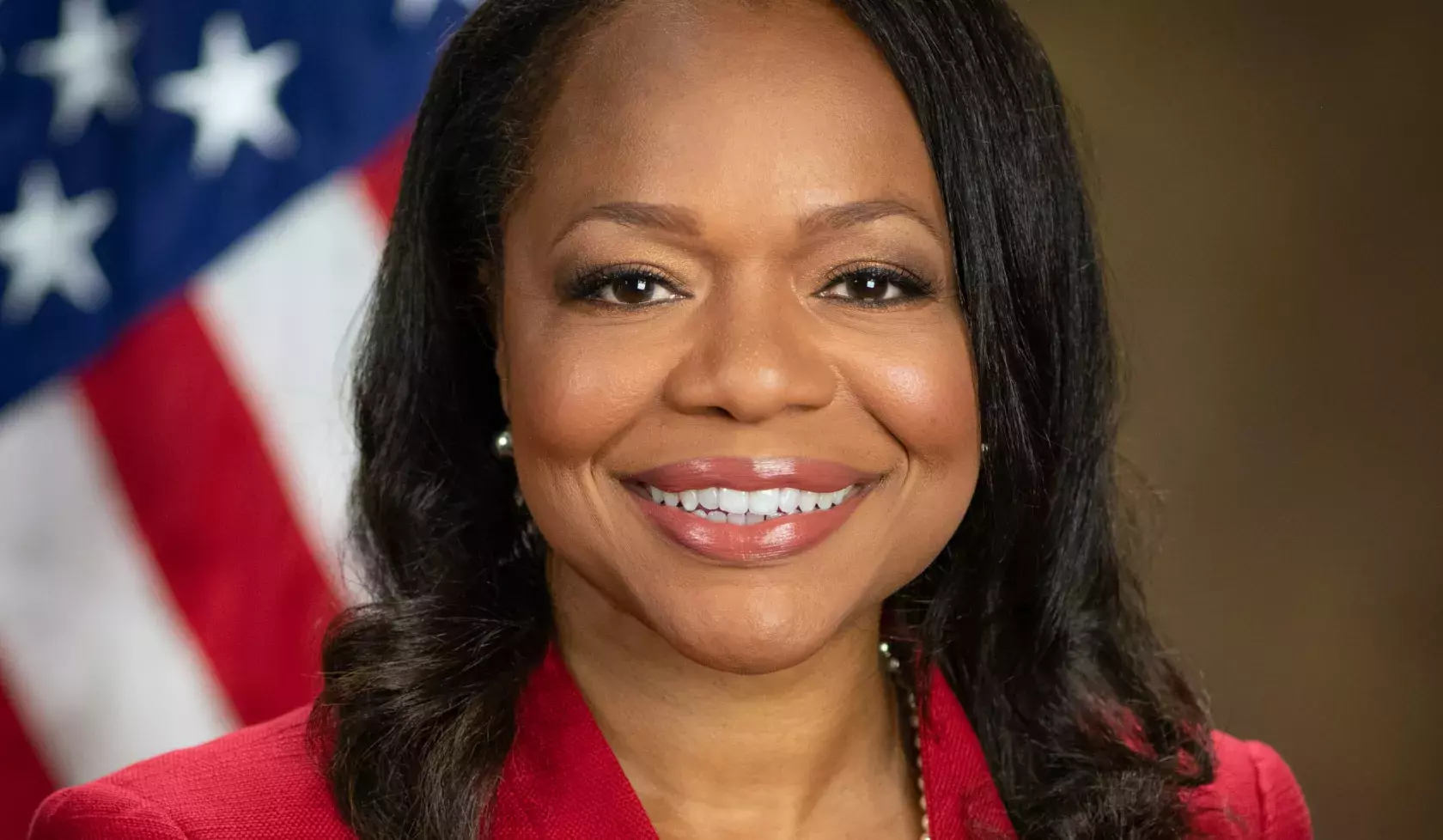
Assistant Attorney General Kristen Clarke Delivers Remarks at the National Bar Association’s Junius W. Williams Luncheon

0

Remarks as Prepared for Delivery

Good afternoon and thank you for the kind introduction. I also want to thank the National Bar Association (NBA) for the invitation to speak. It is an honor to speak at a luncheon named for the venerable Junius Williams, whose leadership and civil rights advocacy have helped advance causes we all hold so dear.

The NBA has an enviable track record of leadership in civil rights. Going back to the early 20th century, NBA lawyers have taken on responsibility for protecting and defending people from rights abuses. Black lawyers tried a case in 1919 to ensure Black voters were not prevented from participating in primary elections in Texas. Black lawyers fought segregation in Louisville, Kentucky. In the 1920s, Black lawyers challenged restrictive housing covenants in Washington, D.C. Black lawyers saved from the death penalty in 1942 the wrongly convicted “Pompano Boys” in Florida.

Across the decades between now and then, NBA members have continued to make huge differences in our communities. They established free legal clinics, helped lead the pro bono movement of the civil rights era and they made Brown v. Board of Education a pivotal case in the civil rights movement. No wonder many people refer to the National Bar Association as the nation’s legal conscience.

As I stand before you, a lifelong civil rights attorney, I reflect on the role of attorneys in the movement for justice and freedom. Of course, lawyers have played a critical role in dismantling the legal structure of discrimination and in enforcing the civil and criminal anti-discrimination laws. As Dr. King told us, “It may be true that morality cannot be legislated, but behavior can be regulated. It may be true that the law cannot make a man love me, but it can keep him from lynching me.”

Twenty-twenty-four is a year of important anniversaries for the civil rights attorney: 60 years ago, Freedom Summer changed the course of American history. Earlier this month, the Civil Rights Act of 1964 turned 60. In May, the landmark Brown v. Board of Education decision turned 70. These anniversaries are not merely dates on our calendar. They serve as landmarks in a relay race toward justice, where the work of the past allows us to carry the baton onward today and, soon, to pass the baton beyond us.

But attorneys were at first left out of conversations about civil rights. We have not always been seen as the influencers or opinion makers we are. With the civil rights movement, that changed. It started with an open letter in an Alabama newspaper challenging Governor George Wallace’s position on integration. Bernard Segal, then president of the American Bar Association, along with 46 other lawyers, declared that Wallace could not defy the federal court’s order to desegregate the University of Alabama.

Soon after, Attorney General Robert F. Kennedy invited 244 lawyers to the East Room of the White House to hear President John F. Kennedy and others speak about the need for civil rights legislation. This was part of the Kennedy administration’s effort to win hearts and minds to the cause by persuading powerful people of its urgency. Bobby Kennedy spoke as well. He argued that members of the legal profession, who had sworn an oath to the Constitution, were obligated to advance the rule of law.

This meant more than merely litigating their own cases, in their own realms. It meant using their specialized knowledge and skills to advance civil rights. Bobby Kennedy’s entreaty did not fall on deaf ears.

Lawyers and many others took to heart these additional words from Dr. King: “[T]he law cannot change the heart, but it can restrain the heartless, and this is what we often do and we have to do in society through legislation.”  

I am sometimes struck by the fact that the Civil Rights Division that I now oversee did not always exist. Now in its 67th year, it is the product of the activism and organizing of the early civil rights movement, but also strategic and sound lawyering. For nearly seven decades, the Civil Rights Division has sought to protect and defend every American from harm and discrimination. While this goal is enduring, brick by brick we build justice up, even as others would dismantle it. In recent years, we have celebrated serious and important victories.

One of our highest priorities is ensuring that all eligible citizens can participate in that most fundamental element of democracy — the right to vote. Unfortunately, voter suppression efforts are still rampant across the country today, and we have taken many steps to fight these.

We have enforced voting rights laws. We continue to litigate several major cases brought in 2021 and 2022 to protect the right to vote in Texas (statewide redistricting), Georgia (state legislation on voting procedures) and Arizona (state legislation on voting procedures). In May, we won an injunction in Mi Familia Vota v. Fontes against an effort to require documentation of place of birth by people registering to vote in presidential elections.

We have defended the private rights to challenge practices under the Voting Rights Act (VRA) and other voting rights laws in district courts in Alabama (2), North Dakota, Pennsylvania, Kansas, Florida, Colorado and Texas.

We have defended the constitutionality of Section 2 of the VRA through intervention, including voter intimidation protections in Fair Fight v. True the Vote, which is pending, supporting the constitutionality of the Voting Rights Act in several pending cases challenging Georgia’s statewide redistricting plans and challenging the 2022 Louisiana House and Senate redistricting plans in Nairne v. Ardoin, which is pending, to defend the constitutionality of the Voting Rights Act.

Hate crimes continue to plague the most vulnerable members of our communities, stirred by renewed forces of racism and xenophobia. These offenses are intolerable, and the Civil Rights Division is committed to vigorously prosecuting the perpetrators. We have charged more than 120 defendants with hate crimes in over 110 cases since January 2021. This includes the three white men who killed Ahmaud Arbery just because he was Black, and the person who killed five and wounded 19 at Club Q in Colorado Springs, a haven for the LGBTQI+ community. Our work in this area can never undo the damage to victims or their families, but our swift and determined response can send a loud and clear message that no one should have to live in fear for because of how they look, where they are from, who they love or how they worship.

Every American has a right to policing that keeps them safe while protecting their constitutional rights. Most law enforcement officers fulfill this obligation faithfully, doing a hard job well, with often-unheralded acts of heroism. But when some officers engage in misconduct, it undermines the public trust essential to effective policing and deprives community members of fundamental rights. We have responded decisively to such misconduct.

We have charged, convicted and put behind bars the officer responsible for tragically murdering George Floyd, and the three officers who stood by idly while he did so. We charged the Louisville officers whose misconduct resulted in the tragic death of Breonna Taylor, and the five Memphis police officers who beat Tyre Nichols to death. And six law enforcement officers in Rankin County, Mississippi, who described themselves as the “goon squad,” received sentences ranging from 10 to 40 years for bursting into the home of two Black Mississippi men without probable cause, abusing them, calling them racial epithets and torturing them.

The Civil Rights Division has also addressed systemic, structural injustices that run deep in this country. Banks and credit unions continue to deny loans to borrowers of color. Cities and towns continue to block affordable housing in their zeal to keep neighborhoods white. But in 2021, the Justice Department announced the Combating Redlining Initiative, under which we have achieved 12 redlining resolutions and secured significant restitution for communities of color: $122 million.

We protect children of color, children with disabilities and children with limited English proficiency who face bigotry and endure unfair treatment in their schools. As one example of many, two weeks ago we secured an agreement with Wichita Public Schools, Kansas’s largest school district. The district had a pattern of disproportionately disciplining children of color and children with disabilities, including referring them to the police. Our agreement ensures Wichita will be accountable for implementing the following: to stop this discrimination, end the use of seclusion, reform its restraint practices and improve services.

I could share dozens of additional examples of how we protect every American from unfair treatment: From Uber riders with disabilities being overcharged to people with mental health disabilities being unnecessarily institutionalized. From minors coerced into engaging in commercial sex to Black people exposed to risk of illness and other serious harm because of racially discriminatory and inadequate access to safe and effective sewage management.

I believe Bobby Kennedy’s 1963 call to action remains relevant today. And I see you, continuing to heed the call. You are putting your skills and expertise toward making sure our legal system and all our laws manifest our nation’s ideals. For some of us, this is through our core job. For others it is through pro bono representations or volunteer work. Without a doubt, you shoulder a tangible burden. As these last years have shined a light on injustices that persist even decades after the sweeping reforms wrought by the civil rights movement, the members of the NBA are standing up and stepping forward. You are making a difference.

As the late Congressman John Lewis reminded us, “Ours is not the struggle of one day, one week, or one year. Ours is not the struggle of one judicial appointment or presidential term. Ours is the struggle of a lifetime, or maybe even many lifetimes, and each one of us in every generation must do our part.”

We are all, in this room, powerful people. We are influencers. We are opinion makers. We are judges, attorneys, policymakers, advocates and citizens with an urgent drive to protect our democracy and to ensure equal justice under law. If we approach these challenges with courage and conviction, with fidelity to the Constitution and with empathy for those who are suffering, I have no doubt that we can move this nation closer to the ideal of equal justice that your forbears in the NBA worked so valiantly to achieve.

Thank you for having me today.

Smartphone Fraudster Chad Leon Sayers Jailed 29 Months for Cheating Investors Out of $10m

0

A Utah businessman has been sentenced in federal court for the second time this year after he admitted to defrauding hundreds of trusting investors throughout the United States out of $10 million in his smartphone company, SAYGUS. 

Chad Leon Sayers, 60, of Midvale, Utah, was sentenced to 29 months’ imprisonment, 15 of which were ordered to run consecutively to his existing sentence of 41 months’ imprisonment, which was imposed in a separate wire fraud case, for a total of 56 months.

The sentence imposed by U.S. District Court Judge David Sam also includes 12 months’ supervised release, and ordered to pay $10,250,834.53 in restitution and a forfeiture money judgement in the same amount. 

According to court documents and statements made at the change of plea hearing, from 2006 to 2020, Sayers defrauded approximately 300 investors out of $10 million by lying about SAYGUS being on the brink of a multi-billion-dollar payout.

Sayers claimed to investors he was developing a smartphone called the “V” phone and then later the “V-Squared.”

He claimed that a well-known wireless company agreed with SAYGUS to sell and support its phones. Additionally, Sayers told investors that they could receive 100 times their original investment and that funds would go toward the research, design, and manufacturing of the new smartphone when no cell phones were being manufactured.

Sayers also claimed that SAYGUS was only raising funds through a stock offering to accredited investors when it was not. 

For over a decade, Sayers spent investment funds on various expenses, including personal loans, personal credit card bills, personal rent, personal legal fees, personal BMW car payments, office rent, Ponzi-like “note repayments,” investor lawsuit settlements, legal fees and $144,773 on shopping, entertainment, food and personal care. 

To support his fraudulent scheme and create the impression of a successful consumer product technology company, Sayers rented office space for SAYGUS and occupied approximately 25,990 square feet (3 floors) for approximately 10 employees.  

Additionally, on 26 different occasions, Sayers tweeted that the smartphone would be launching or available by a certain date when, in fact, it never launched. Sayers even sent out newsletters to investors, updating them on developments. 

Venezuelan Citizen Diego Ibarra Convicted over Fake Green Card

0

A Venezuelan citizen admitted to possessing a fraudulent green card in federal court and will be sentenced in October.

Diego Ibarra, 28, of Venezuela, pleaded guilty to two counts of possessing a fraudulent document before U.S. District Judge Tilman E. Self, III on July 15. Ibarra faces a maximum of 10 years in prison, followed by up to three years of supervised release and a $250,000 fine per count.

Ibarra remains in federal detention. His sentencing date is scheduled for Oct. 7. There is no parole in the federal system.

According to court documents and statements referenced in court, Diego Ibarra admitted to possessing a counterfeit United States Permanent Resident Card in the name of Diego Jose Ibarra in Athens, Georgia, on October 27, 2023, and Feb. 23, 2024.

His sibling, Argenis Ibarra, 24, and former roommate, Rosbeli Flores-Bello, 29, both of Venezuela, are charged by federal indictment with two counts each of possession of a fraudulent document and face a maximum of ten years in prison to be followed by up to three years of supervised release and a $250,0000 fine per count.

An indictment is only an allegation of criminal conduct, and all defendants are presumed innocent until and unless proven guilty in a court of law beyond a reasonable doubt.

According to the filed indictment, Argenis Ibarra and Flores-Bello are alleged to have each possessed a fraudulent United States Permanent Resident Card and a counterfeit United States Social Security Card in the names of Argenis Jose Ibarra Ibarra and Rodrianny Brito Brito, respectively, on February 23, 2024, in Athens.

Argenis Ibarra had his initial appearance in Macon on July 11 and was detained. Flores-Bello’s detention hearing is scheduled for July 16 in San Antonio, Texas.

A federal grand jury returned the superseding indictment charging all three co-defendants on June 11, 2024; the indictment was unsealed on July 2, 2024.

Whatcom County Fentanyl Trafficking Ring Member Natasha Parkhill Caught, Jailed for Dealing Deadly Pills to Lummi Nation, Others

0

A Bellingham, Washington woman who was a redistributor for a fentanyl distribution ring was sentenced today in U.S. District Court in Seattle, announced U.S. Attorney Tessa M. Gorman.

Natasha Parkhill, 38, of Bellingham, pleaded guilty in March 2024 and was sentenced to four years in prison today.

At the sentencing hearing U.S. District Judge Richard A. Jones said, “You knew what the devastation would be since you had a drug addiction, yet you still continued to distribute fentanyl without regard for the impact on the community.”

“This drug ring, and specifically Ms Parkhill as a drug redistributor, had a terrible impact on the Lummi Nation – a tribe that is dealing with tragically high fentanyl overdose deaths,” said U.S. Attorney Gorman. “I appreciate the Lummi Nation leadership speaking to the court today about fentanyl’s impact on the community, to hold these defendants accountable for the harm they have caused.”

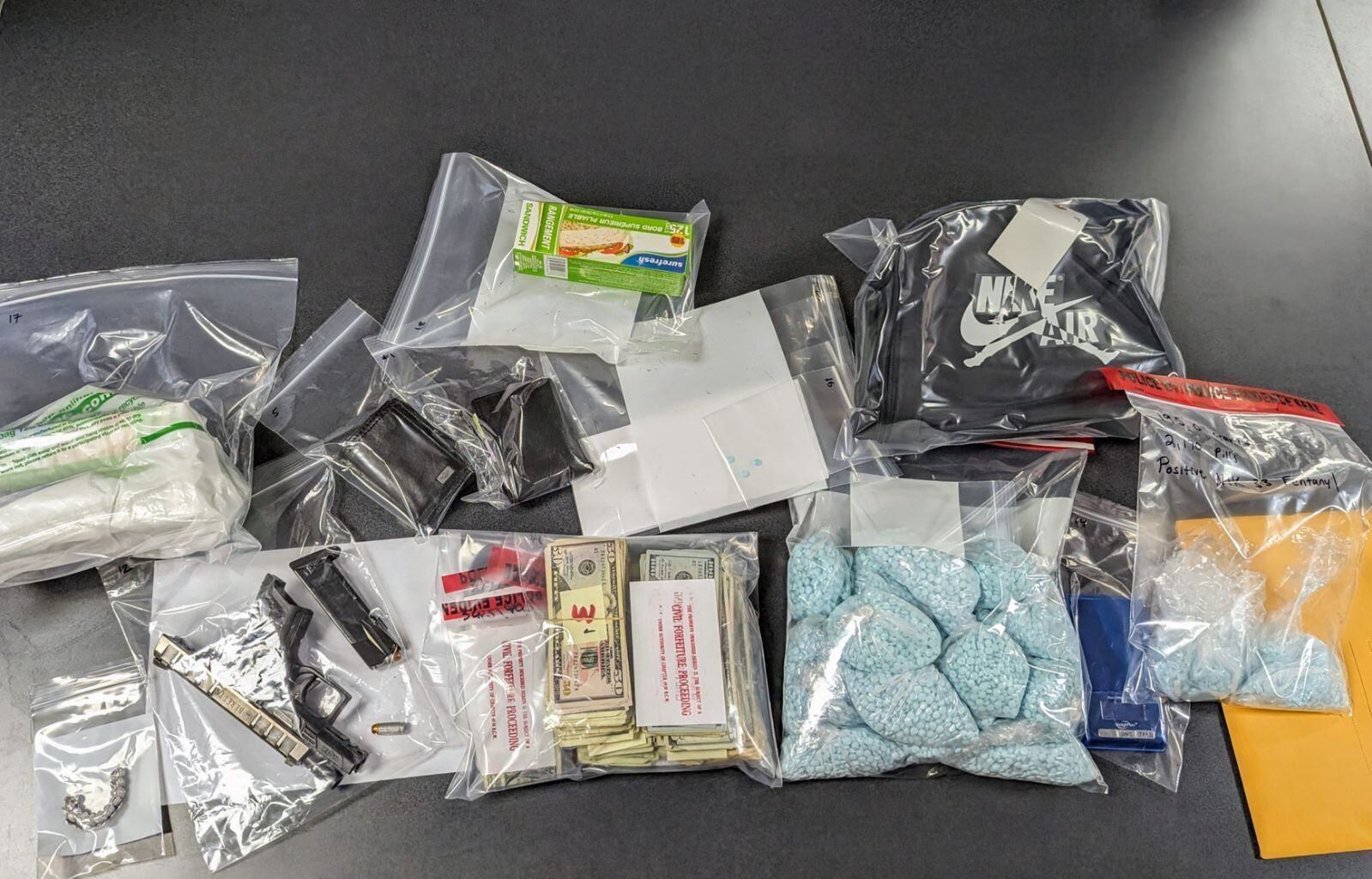
According to records filed in the case, Parkhill was one of six people charged federally in a months-long investigation of fentanyl dealing in Whatcom County. The ring was actively moving fentanyl from the Seattle area to redistributors in Bellingham. Law enforcement officers observed various drug transactions and interdicted the drug loads. In one instance, law enforcement was called to a mini-mart where two people involved with the drug ring overdosed on fentanyl and had to be revived and transported to the hospital.

Parkhill was observed by law enforcement engaging in drug sales. In January 2023 law enforcement attempted to arrest her but she fled. Her car suffered a mechanical problem, and she was taken into custody.  She had about 1,000 fentanyl pills and over $1300 in cash when she was arrested.

Lummi Nation Chairman Anthony Hillaire spoke today at the sentencing of Ms. Parkhill. “Drug dealing is a crime that is very much intentional and for monetary gain at the expense of familial loss. This destruction of our generations will have a long-lasting, negative impact on our people,” he remarked. In a letter to the Court, he continued to describe the devastation of the fentanyl crisis: “In our community, I have witnessed spouses, parents, children, siblings, grandchildren, cousins, and friends plan funeral arrangement for a loved one due to a drug overdose. I will never forget the cries of elementary-aged children crying for their father at his funeral and saying, ‘I just want my daddy’.”

Two other members of the drug ring have already been sentenced: 39-year-old Daniel Faix of Bellingham was sentenced in March 2024 to ten years in prison. Ahbdurman Ahmed, 33, of Seattle was sentenced in January 2024 to six years in prison. Defendant Mohamed Abdirisak Mohamed, 35, of Seattle pleaded guilty in January and will be sentenced in September. Defendant Matthew Anderson, 35, of Bellingham, pleaded guilty to drug trafficking charges on June 25, 2024. Defendant Robel Sisay Gebremedhin, 41, of Burien, WA is being sought by law enforcement.