

Saturday, March 14, 2026
- Advertisment -
Google search engine
Home Blog Page 10

Years of Blood, Rascality, Corruption and Economic Retrogression: How Nigerians Remember Buhari

0

On Sunday, July 13, around 4 pm. Social media conversations in Nigeria, particularly on X, took a dramatic shift. It followed the news of the demise of Nigerian former President Muhammadu Buhari, who, according to his media aide, Garba Shehu, had died in a London hospital, where he had been receiving medical treatment.

“The family has announced the passing of the former President, Muhammadu Buhari, this afternoon, in a clinic in London,” Shehu announced.

The Nigerian social media space thus erupted into a frenzy of mixed reactions underlined by people’s memories of Buhari. To some, it stems from their knowledge of him during his eight years of presidency, starting from 2015. To others, it dates back to about 42 years ago, when he was the military dictator. Fuelled by what many believe to be agony emanating from recent memory, the former had the loudest voices, not that the latter in any way shared sweet memories of the late president.

“Buhari banned X (Twitter) because of his fragile ego. He refused to transmit power to his Vice as constitutionally required, despite not being in good health or in the country for months. I don’t even want to talk about the Lekki Toll Gate massacre,” human rights lawyer, Inibehe Effiong, wrote.

“He made nonsense of the economy and allowed criminals to operate freely in his cabinet. After destroying the country, he supervised a fraudulent election that brought a terrible successor who has continued from where he stopped in their Nigeria destruction agenda,” he added.

Buhari’s second coming to power in 2015 was preceded by several failed attempts, which were characterised by violence and bloodshed but were overshadowed by the ‘Messianic emotionalism’ that enveloped Nigeria and was sustained largely along ethnic and religious lines. In 2011, about 11 people, largely members of the National Youth Service Corps. (NYSC), were killed in Kano by Buhari supporters after he lost a presidential election.

Buhari was believed to be the answer to Nigeria’s long yearning for a corruption-free country, a belief buoyed by his perceived stance against corruption in 1983.

Though his dictatorial and economic antecedents from 1983 were available in black and white for all to see, many voted for him as he was rebranded as a ‘reformed democrat.’ It was said that Nigerians, spurred by emotion and sentiment, jumped on his ‘change’ (a campaign slogan his political party, the All Progressives Congress, created) bandwagon, not minding.
However, a few months after he was sworn in on May 29, 2015, the emotion began to be diluted by his actions and inactions across all areas of Nigeria’s wellbeing, and it accelerated quickly, creating impacts that Nigerians will not forget anytime soon.

Buhari promised Nigerians to address insecurity and put an end to Boko Haram terrorism. But months after he was sworn in, Nigeria’s security situation advanced from bad to worse, with the birth of killer Fulani herdsmen, who were described as one of the most deadly terror groups in the world. It was a bloodbath almost every day.

Many believed that the government’s response was as infuriating as the terror itself. Buhari, addressing the herdsmen killings, only urged Nigerians to accommodate “your countrymen,” then claimed they were “foreigners from Libya.” This created the belief that his administration favoured and protected his Fulani kinsmen, throwing Nigeria’s fragile unity into deeper chaos.

Then, in what his administration said was a solution to the problem, dubbed the herder-farmer crisis, Buhari proposed RUGA – a livestock policy proposal designed to mandate settlements for herdsmen across the 36 states of the federation. The policy was suspended following heavy backlash.

Besides the tens dying every day from the guns and swords of terrorists, there were others who Nigerian security forces, under the watch of Buhari, were massacring. In 2015, over 300 Shia Muslims were killed by the military, in what was later known as the Zaria massacre. There was also the Agatu Massacres of 2016, which set the tone for the large-scale killings with impunity that have dogged Nigeria’s Middle Belt till today. In 2016, Amnesty International reported the death of over 150 members of the Indigenous People of Biafra (IPOB), who were on a self-determination campaign in Southeast Nigeria.

The blood spillage was capped by the Lekki Toll Gate Massacre in 2020, where security forces killed scores of peaceful #EndSARS protesters against police brutality.

“My bank account was blocked. I lived in a safe house for 7 months. My car was shot at. I saw bodies. Got a bullet wound. I can go on and on, sued the Buhari government,” Sera Ibrahim recounts her ordeal after the Lekki Massacre.

As Nigeria was drenched in blood, Buhari’s economic policies were unravelling, reversing the gains made under former President Goodluck Jonathan. In August 2019, Buhari announced the closure of Nigerian land borders, a protectionist policy he said would boost local production and curb arms smuggling. The decision, among other economic policies, saw Nigeria’s inflation jump from single to double digits, with food inflation spiking over 300%.

Eventually, the country suffered a double recession, marking the end of Nigeria’s enviable economic growth, which had been projected to be the third-fastest-growing economy in the world in 2015, and the beginning of economic turmoil that would linger years after Buhari’s leadership and death.

Today, Nigeria’s sky-high inflation has been largely attributed to the illegal printing of N30 trillion in Ways and Means that Buhari ordered the Central Bank of Nigeria (CBN), under the leadership of former Governor Godwin Emefiele, to print. Economists noted that the most disappointing part isn’t the illegality but that there is nothing to show for the money. The printing of N30 trillion did not even cut borrowing.

Unemployment rose from 10.4% in 2015 to 33.4% in 2020 – five years into his eight-year rule. According to the Budget Office, between 2016 and 2022, the Buhari government raised total revenues of N26.67 trillion and expended N60.64 trillion, leaving a deficit of N33.97 trillion. Ultimately, he moved Nigeria’s public debt profile from N42 trillion to N77 trillion by May 2023.

“I had never heard of the concept of being a care worker in the UK until Buhari became president, wrecked the economy, and tens of thousands of Nigerians started looking for where to flee to,” Osarogie Ogbonmwan wrote.

While Nigerians cried out over his actions and inactions, Buhari activated his 1983 Decree Number 4, which he used as a military dictator to silence dissent. The decree criminalised any reporting deemed critical of the government. Thus, media houses were targeted, and journalists and some critics of his government fled the country. However, his crackdown extended beyond the civic space to encompass everyone he deemed an enemy.

The Twitter ban of 2021, following the platform’s deletion of one of Buhari’s posts threatening the Igbos of the Southeast region, lasted seven months. It was no surprise to many who knew him from way back, even though it was seen as a clear depiction of authoritarian impulse, one at odds with the democratic principles he was elected to uphold.
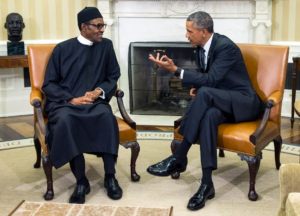
Politically, his administration displayed a troubling erosion of judicial independence, exemplified by the prolonged illegal detention of figures like El-Zakzaky and Sambo Dasuki, despite court orders for their release. The suspension of Chief Justice Walter Onnoghen, which was widely described as a blatant bastardisation of the rule of law, further undermined faith in the government’s ability to follow due process. The abduction of Nnamdi Kanu, the leader of IPOB, from Kenya, and his illegal detention in defiance of court orders, have also been cited as an example of Buhari’s government rascality.

While all this was unfolding, Buhari was seen failing spectacularly in one area that people thought he would excel in – fighting corruption. With allegations of nepotism and lopsided appointments favouring mainly people from the north, officials in his government were largely accused of corruption.

“He had an abysmal scorecard on internal security and emboldened widespread corruption not seen since the mid-1990s. He has almost no legacy worth applauding,” wrote Abubakar.

Among the many traits that people said they noted as Buhari unravelled was hypocrisy. For a man who had championed a campaign for local consumption, with slogans such as ‘Buy Naija to Promote the Naira’, Buhari spent months in a London hospital. This is despite billions of naira allocated to the State House Clinic. For instance, 3.94 billion was allocated for the clinic in 2015, N3.87 billion in 2016, and N3.2 billion in 2017; the allocations were increased in subsequent years. This disparity underscored a leader who failed to fix the very system meant to serve him, let alone ordinary Nigerians.

“A man who closed the borders to encourage consumption of local produce yet ends up dying in a UK hospital, where he was a regular consumer of British healthcare. Sums up the contradiction of a man that was loved by many common people, yet didn’t care to use his image of integrity to further the lot of the common man,” wrote another Nigerian named Neto.

In his eight years of leadership, Buhari was accused of insouciance toward the plights of Nigerians – not showing up, or speaking up when the country needed him most. His lack of empathy was pointed out in many instances of killings across the country, in which the president failed to sympathise with the people, visit them, or even acknowledge their ordeal.

Against the backdrop of bitter memories that characterised Buhari’s time in power, some Nigerians, at the news of his death at 82, believe the former president lived so long for a man who caused his country so much pain.

“There’s no joy in Buhari dying. Definitely no pain, but there’s no celebrating the passing of someone who ruined the country, and still died at a ripe old age. If there’s any justice in the world, there should be dire consequences for damaging the futures of generations to come,” Chidi Okereke wrote.

AGESI Issues Strategic Climate Blueprint Ahead of Nigeria’s NDC 3.0 Release

0

The African Green Economy Stakeholders Initiative (AGESI) has unveiled an advisory titled ‘Forging Nigeria’s Green Future: A Strategic Blueprint for the Forthcoming NDC 3.0’, offering a roadmap for Nigeria’s leaders and partners as the country finalises its pivotal national climate strategy.

With Nigeria on the brink of submitting its Third Nationally Determined Contribution (NDC 3.0), AGESI’s document positioned itself as a call to action and practical guide for government officials, private sector leaders, and international investors. The document was released on Saturday by the organisation.

The blueprint not only highlights the transformative ambition of the soon-to-be-released NDC but also provides step-by-step recommendations to ensure its success from day one.

AGESI’s advisory noted that NDC 3.0 marks a “fundamental paradigm shift” in Nigeria’s development narrative. Rather than viewing climate action as a regulatory burden, the strategy recasts it as an engine of economic growth. Central to the document is the proposal for Nigeria to adopt clear and ambitious absolute emissions targets—20% unconditionally, and up to 47% conditional on international support by 2035—moving away from previous, less rigorous targets.

The blueprint emphasises the Circular Economy as the anchor of this transformation. According to AGESI, Nigeria’s Circular Economy Roadmap goes beyond incremental policy changes. Instead, it seeks systemic industrial reform—eliminating waste, keeping materials in play, and restoring natural resources—that could unlock efficiencies and spur local innovation.

Recognising the critical need to attract both domestic and global investment, AGESI’s report details a proposed 8-Pillar Investment Framework for the NDC. This framework is designed to build investor confidence by ensuring effective project vetting, robust governance through the National Council on Climate Change (NCCC), and radical transparency via international-standard tracking systems.

AGESI points to flagship projects, such as the planned Lagos Waste Valorisation Facility, as examples of how the proposed approach can transform environmental liabilities into assets with high returns, both financially and environmentally.

AGESI’s blueprint concludes with tailored recommendations. It calls on government ministers to maintain bold targets, prepare institutions for immediate action, and finalise key fiscal incentives such as Green Bonds and a national Green Finance Taxonomy.

For private sector players, AGESI urges alignment with the NDC’s direction and early project pipeline development. International investors, meanwhile, are encouraged to ready blended finance instruments and support project preparation to ensure a pipeline of investable, de-risked projects post-launch.

“This is not just a climate plan,” AGESI’s advisory insists. “It is an investable blueprint for national transformation and sustainable prosperity.”

The release of AGESI’s strategic blueprint arrives as anticipation builds for Nigeria’s official unveiling of NDC 3.0 later this year—an event expected to set a new standard for climate policy and green investment across Africa.

Owners of Northern Arizona Businesses Robert Clouston, Brenda Clouston, Luis Pedro Rogel-Jaimes, Iris Romero-Molina Arrested for Labour Exploitation

0

On July 15, Homeland Security Investigations and other law enforcement agencies executed federal search warrants at five Colt Grill restaurants and 12 residences in two states after a three-year labour exploitation investigation and a five-count federal indictment against four individuals in Arizona.

On May 27, 2025, a grand jury in Phoenix returned an indictment against Robert and Brenda Clouston, both 61, of northern Arizona, and Luis Pedro Rogel-Jaimes, 33, and Iris Romero-Molina, 29, both Mexican nationals illegally present in the United States and residing in Cottonwood, Arizona, for conspiracy to transport illegal aliens, conspiracy to harbour illegal aliens, conspiracy to encourage and induce an alien to unlawfully enter the United States, and pattern and practice of knowingly employing unauthorised aliens.

The indictment alleges that Robert and Brenda Clouston operated four Colt Grill restaurants in the northern Arizona cities of Cottonwood, Prescott, Prescott Valley, and Sedona, as well as one Colt Grill in Foley, Alabama.

In September 2022, the Cloustons, along with Rogel-Jaimes and Romero-Molina, devised a plan for Romero-Molina to establish R&R AZ Cleaning, a cleaning company that would operate as a staffing agency for the Colt Grill restaurants. Rogel-Jaimes and Romero-Molina would then find undocumented workers to work at the restaurants, paying them through R&R AZ Cleaning with funds from Colt Grill.

The undocumented workers were paid below minimum wage and were not compensated for overtime. The Cloustons, Rogel-Jaimes, and Romero-Molina benefited financially from the plan and did not pay proper employment taxes for the workers.

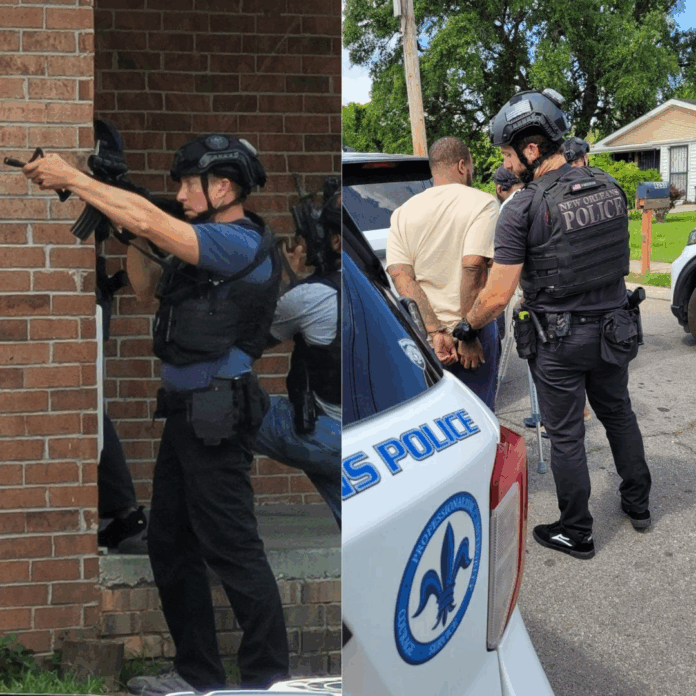
All four indicted individuals were arrested on July 15 without incident. While executing the warrants, law enforcement also arrested several undocumented illegal aliens for criminal or administrative immigration violations.

“Cooperation is the cornerstone for law enforcement in Arizona, and this case demonstrates the great outcome that comes from federal and local law enforcement working together,” said United States Attorney Timothy Courchaine. “The United States Attorney’s Office is grateful to HSI for their hard work on this investigation and extremely appreciative to the Yavapai County Sheriff’s Office for their support and willingness to keep their community safe from bad actors.”

“The success of this investigation is in large part due to the coordinated efforts of many law enforcement agencies working alongside HSI through the Homeland Security Task Forces,” said Ray Rede, acting special agent in charge for HSI Arizona. “This multiyear case involving several federal charges is a testament of our commitment to combatting crime that has true impact to communities. I thank everyone involved – this case was true team effort.”

“On behalf of the citizens of Yavapai County, I want to thank our federal partners at the U.S. Attorney’s Office, Homeland Security Investigations, and all our local agencies for their collaboration with the men and women of Yavapai County Sheriff’s Office in dismantling this criminal enterprise,” said Yavapai County Sheriff David Rhodes. “Coordinated, multi-agency enforcement actions like this one are essential to protecting our communities from the destabilising impacts of organised crime. By working together, we will continue to leverage every available resource to safeguard the people of Yavapai County from those who seek to do harm.”

A conviction for conspiracy to bring illegal aliens to the United States unlawfully, conspiracy to transport illegal aliens, conspiracy to harbour illegal aliens, and conspiracy to encourage and induce an alien to unlawfully enter the United States each carries a maximum penalty of 10 years in prison and up to a $250,000 fine.

A conviction for pattern and practice of knowingly employing unauthorised aliens carries a maximum penalty of six months in prison and up to a $3,000 fine per unauthorised employee.

South Texas Residents Ofelia Christine Monares, Michael Rosa Jailed for Human Smuggling

0

Two 35-year-old Brownsville residents have been sentenced for smuggling three illegal aliens in the trunk of a vehicle, announced U.S. Attorney Nicholas J. Ganjei.

Ofelia Christine Monares and Michael Rosa pleaded guilty on April 1.

U.S. District Judge Rolando Olvera has imposed a 40-month term of imprisonment for Monares while Rosa received 25 months. Both must also serve one year of supervised release following their sentences.

Both received upward adjustments or increases in their calculated sentencing guideline range for placing the lives of the aliens in jeopardy. Monares also received a sentencing enhancement for being a supervisor of the criminal activity.

At the time of their pleas, both Monares and Rosa admitted to knowingly smuggling three illegal aliens in the trunk of a Nissan Sentra.

On February 24, law enforcement observed several suspected illegal aliens walking along a dirt road near the Rio Grande River. The group climbed into the trunk of a Nissan Sentra, which then fled at a high rate of speed.

Authorities stopped the vehicle at the Highway 4 checkpoint and found three Vietnamese nationals in the trunk. All appeared dehydrated and were sweating profusely.

Rosa was the driver. He said Victor Hugo Medrano-Medrano and Monares had recruited him, and that Medrano and Monares picked him up in a white Nissan Titan and drove him to the Sentra. Rosa said they were to pay him $10,000 to transport the aliens to a local convenience store in Brownsville.

Video surveillance revealed the Titan crossing the checkpoint shortly after Rosa’s arrest. Authorities later located the Titan at the convenience store with Monares driving and Medrano in the passenger seat.

Monares said she was also to be paid $500 for every alien transported.

Medrano-Medrano, 38, Brownsville, has also pleaded guilty and is set for sentencing in September. He remains in custody.

Both Monares and Rosa have also been and will remain in custody pending transfer to a Federal Bureau of Prisons facility to be determined at a later date.

Iowa Nurse Sarah Ann Haptonstall Sentenced to Prison for Bank Fraud, Drug Diversion

0

A former Iowa nurse from western Iowa, who stole pain medication from nursing home residents, burglarised multiple residences, possessed a firearm as a felon, and committed bank fraud, was sentenced on July 16, 2025, to more than three years in federal prison.

Sarah Ann Haptonstall, 47, from Onawa, Iowa, received the prison term after she pled guilty on February 24, 2025, to one count of acquiring and attempting to acquire a controlled substance by misrepresentation, fraud, deception, or subterfuge, one count of possession of a firearm by a felon, and one count of bank fraud.

In a plea agreement, and at her plea and sentencing hearings, Haptonstall admitted that, in March 2023, she burglarised an Onawa couple’s home on multiple occasions to steal narcotic pain medication. One of the residents needed the medication for constant nerve pain. Haptonstall knew this because when she was a nurse in 2021, she had delivered narcotics to the Onawa couple’s residence.

When law enforcement officers arrested Haptonstall on March 10, 2023, after she re-burglarised the Onawa couple’s residence a final time, Haptonstall possessed a 9mm Luger pistol in her truck.  Haptonstall was a felon and drug user at the time, and so it was illegal for her to possess firearms.

Haptonstall had purchased two 9mm Luger pistols in February 2020, after falsely stating that she was not an unlawful user of, or addicted to, a controlled substance.

The burglaries of the Onawa couple’s home were but one part of a larger drug diversion scheme that Haptonstall was perpetrating in western Iowa.  In February and March 2023, Haptonstall was entering multiple apartments in Onawa and stealing the residents’ pain medications.

Further, between April and October 2022, while working as a licensed Iowa nurse, the defendant stole hydrocodone pills from four elderly residents of an Onawa nursing home and a Sergeant Bluff nursing home.  One of the victims was over 90 years old.  Haptonstall removed the narcotics from pill cards and replaced them with Tylenol.

One of the nursing home residents suffered from severe pain as she died because the defendant had swapped out the victim’s narcotic pills for Tylenol and made a false entry in her medical record.  Another resident was in hospice when the defendant stole her narcotics.  Haptonstall was first licensed as a nurse in 2006, and her license was renewed at least five times (in 2009, 2012, 2015, 2018, and 2021).

Haptonstall ultimately surrendered her nursing license.

Haptonstall also admitted that, in early 2023, she committed bank fraud against a small family-owned business in Onawa. Haptonstall, the business’s bookkeeper, abused her position of trust to embezzle over $8,000 from the company.

Specifically, Haptonstall created fraudulent checks payable to herself, drawn on the small business’s account, and bearing one of its proprietors’ signatures.

Haptonstall disguised the fraudulent checks by making false and fictitious entries in the small business’s electronic bookkeeping system.

Haptonstall has an extensive criminal history, beginning with six theft convictions in the late 1990s and 2000s.

Between 1997 and 2013, a state court dismissed more than 30 additional theft charges against Haptonstall after she agreed to pay restitution to the victims in those cases.  Haptonstall’s felony record began in 2006, when she pleaded guilty to forgery after forging signatures on checks. In 2014, Haptonstall was convicted of a felony controlled substance violation after making a material misrepresentation to obtain hydrocodone from a grocery store.

In February 2023, while she was committing bank fraud and about a month before burglarising residences in Onawa, Haptonstall received a ten-year, fully suspended prison sentence in state court for felony drug diversion after she admitted she had swapped patients’ hydrocodone for Tylenol pills while working as a delivery driver for a local pharmacy.

Haptonstall was sentenced in Sioux City by United States District Court Judge Leonard T. Strand. Haptonstall was sentenced to 42 months in prison. She was also ordered to make over $8,000 in restitution to her former employer and to repay $5,000 in court-appointed attorney fees. Haptonstall must also serve a three-year term of supervised release after the prison term. There is no parole in the federal system.

Haptonstall was released on the previously set bond and is to surrender to the Bureau of Prisons on a date yet to be determined.

Anthony Brillante II Convicted of Hiring Hitman to Murder Prosecutor, FBI Agent, Witnesses, Victims

0

On July 11, 2025, a federal jury sitting in Ft. Lauderdale found Anthony Brillante II, 36, guilty of attempted murder of an employee of the United States, solicitation to commit a crime of violence, use of interstate commerce facilities in the commission of murder-for-hire, witness tampering, and obstruction of justice.

The charges stemmed from a plot engaged in by the defendant to murder the federal prosecutor and FBI Special Agent who investigated and prosecuted him for cyber harassment, by hiring a hitman to kill them.

He was also found guilty of attempting to kill the witnesses and victims of his cyber harassment case before the start of his federal cyber harassment trial on October 30, 2023.

In August of 2022, the FBI arrested Brillante for cyber harassing his family in New York.  Brillante, a student at FIU during most of the time of the crimes, spoofed hundreds of different phone numbers to send three victims—his cousin, her husband, and their 12-year-old daughter—tens of thousands of phone calls and text messages over a 15-month period between 2021 and 2022, including countless explicit threats to kill them.

The messages included threatening to shoot them in the in the face and running them over with a car. The federal cyber harassment investigation established that Brillante was also sending similar threatening messages to another cousin and her husband, who both resided in Texas.

In October 2023, just before the start of his federal cyber harassment trial, Brillante directed and paid a total of $40,000 in furtherance of the murder plot.

On October 29, 2023, the day before his cyber harassment trial was scheduled to begin, Brillante met with an undercover FBI agent, who was posing as a hitman, and enlisted him to commit the murders of the prosecuting Assistant United States Attorney, the investigating FBI special agent, and the victims of his cyber harassment case in order to obstruct his federal trial.

Despite his efforts, Brillante was convicted in his first trial of cyber harassment and ultimately sentenced to nine years’ imprisonment.

Sentencing in the murder-for-hire case is scheduled for October 1, 2025.

San Angelo Man Juelz Sincere Armstead Jailed 245 Years for Sextortion Across U.S.

0

A San Angelo man was sentenced to 245 years in federal prison for sextorting minors and an adult across the United States, announced Acting United States Attorney for the Northern District of Texas Nancy E. Larson.

Juelz Sincere Armstead, 21, was found guilty by a Lubbock, Texas jury in April 2025 on five counts of production of child pornography, two counts of attempted production of child pornography, and seven counts of cyber stalking, following a four-day jury trial.

He was sentenced on July 15, 2025, to 2,940 months in federal prison by United States District Judge James Wesley Hendrix.

“The horrendous acts against each victim in this case warranted the substantial sentence imposed here,” said Acting U.S. Attorney Nancy E. Larson.  “We hope that the lengthy incarceration of this defendant will assist the victims as they continue in the healing process and serve as a warning to like-minded predators that we will pursue swift justice and extensive punishment for these types of despicable crimes.”

“This sentence reflects the unspeakable harm Juel Armstead inflicted on innocent victims and the tireless commitment of law enforcement to bring predators like him to justice,” said HSI Dallas Special Agent in Charge Travis Pickard.

Pickard added, “No amount of time can undo the trauma caused, but a 2,940-month sentence ensures this individual will never again have the opportunity to victimise a child. HSI Dallas and our law enforcement partners remain steadfast in our mission to protect the most vulnerable among us and hold those who exploit them accountable.”

According to evidence presented at trial, over the course of approximately three years, Armstead met his victims, nine minors and one adult, on various social media platforms.

He cyberstalked and coerced them into sending him sexually explicit photographs and videos, routinely threatening to expose this material to family, friends, and others if they did not create and send him more sexual abuse material.

Testimony in the case revealed that the Tom Green County Sheriff’s Office arrested Armstead for his conduct in December 2022 and, upon his release from jail, Armstead obtained another cell phone and continued his sextortion scheme.

Armstead continued to amass more victims until his second arrest in February 2024.

At trial, victims from across the United States testified about the abuse and the emotional trauma Armstead caused them.

Many victims described how Armstead’s threats placed them in fear, that they felt their lives were over, and that they felt as if Armstead’s actions were raping them.  In some cases, victims felt suicidal.

Graphic photographs and videos were discussed at trial, including one of a 14-year-old victim with tears rolling down her cheeks as she created the sexually explicit video Armstead demanded.

Another 18-year-old victim was so fearful of Armstead’s repeated threats to harm and expose her that she was manipulated into filming sexually explicit videos of her 13-year-old sister. The prosecution introduced tens of thousands of pages of messages between Armstead and the victims, along with hundreds of photographs and video evidence.

At sentencing, Homeland Security Investigations Special Agent Mike Baker testified that there were additional victims who were too traumatised to prepare for and attend trial.

In issuing the 245-year sentence, Judge James Wesley Hendrix described Armstead’s conduct as “repeat, incessant terrorising and bullying [of] these victims over and over again without any sign of mercy.”

Judge Hendrix told Armstead, “You are an incredible danger. The protection of the public is at its apex here.”

Tennessee Man Ryan Glidewell Convicted of COVID-19 Employee Retention Credit Fraud; Faces 30 Years’ Imprisonment

0

A Tennessee man has pleaded guilty to conspiring to commit wire and mail fraud, aiding and assisting in the preparation of a false tax return, and money laundering, for his role in a scheme to claim refunds based on false COVID-19 employment tax credits.

According to court documents and statements made in court, Ryan Glidewell conspired with others to file false tax returns seeking refunds based on the Employee Retention Credit and Paid Sick and Family Leave Credit, both of which were created by Congress to aid struggling businesses during the COVID-19 global pandemic.

Glidewell and co-conspirators created phoney businesses, which lacked any employees or operations, for the sole purpose of falsely claiming the credits.

Glidewell filed numerous false tax returns for those businesses and directed the tax refunds to be mailed to addresses he and co-conspirators controlled.

In total, the false returns claimed over $3.4 million in tax refunds, of which the IRS paid $1.8 million.

Glidewell is set to be sentenced on November 12.

He faces a maximum penalty of 20 years in prison for conspiring to commit mail and wire fraud, a maximum penalty of 10 years in prison for money laundering, and a maximum penalty of three years in prison for aiding and assisting in the filing of a false tax return.

A federal district court judge will determine any sentence after considering the U.S. Sentencing Guidelines and other statutory factors.

Bishop Staccato Powell of African Methodist Episcopal Zion Church Convicted of Defrauding Congregations in California

0

Staccato Powell, a former bishop in the African Methodist Episcopal Zion Church, has pleaded guilty in federal court to wire fraud, mail fraud, and conspiracy to commit wire fraud and mail fraud in connection with a far-reaching scheme to obtain control of church properties in California using false statements, forged documents, concealment, and deception.

Powell, 65, of Wake Forest, North Carolina, was indicted along with co-defendant Sheila Quintana by a federal grand jury in January 2022.  Quintana pleaded guilty to conspiracy to commit wire fraud and mail fraud in April 2025.

According to court documents and the plea agreement, in 2016, shortly after Powell was selected as bishop and assigned to AME Zion Church’s Western Episcopal District, a geographic division of the church covering several states in the western United States, including California, he formed an entity called Western Episcopal District, Inc. (WED, Inc.).  Powell was the chief executive officer of WED, Inc., and Quintana was the chief financial officer from 2017 to 2019.

In 2016, Powell instructed pastors of AME Zion Churches throughout the Western Episcopal District to sign deeds granting WED, Inc. title to their congregation’s property – typically the church building, but also any outbuildings, lots, parking lots, and residences used by the pastors.  At Powell’s direction, Quintana and other WED, Inc. officers worked on completing the necessary steps to accomplish the transfer of titles through grant deeds.

Starting in early 2017, Powell instructed Quintana and other WED, Inc. officers to obtain loans using the property of local AME Zion Churches acquired through the grant deeds as collateral for the loans.

In response to the lenders’ request for confirmation of the local AME Zion Church’s authorisation of the loan, Powell caused to be created documents purporting to be resolutions by churches to support WED, Inc.’s loan applications.

In several instances, Powell directed WED, Inc. to use church resolutions containing false statements and instructed Quintana to create the false documents and sign the resolutions in the name of an officer from the local church.

In pleading guilty, Powell admitted to fraudulently obtaining mortgages on the following church properties: Kyles Temple in Vallejo, First AME Zion Church in San Jose, Greater Cooper AME Zion Church in Oakland, University AME Zion Church of Palo Alto and First AME Zion Church in Los Angeles

Further, Powell admitted that at his direction, WED, Inc. borrowed $2.15 million in September 2019 to pay off other outstanding loans and $3 million in December 2019 to pay off the September 2019 loan, using several AME church properties in Arizona and California as collateral.

In addition, while serving as bishop, Powell diverted some of the funds borrowed by WED, Inc., using properties of local AME Zion Churches as collateral, for his personal benefit, including the purchase of real property in North Carolina for two of his children and payment of mortgage debt that he owed on a residence in North Carolina.

Powell caused WED, Inc. to file for bankruptcy in a July 2020 petition, in which it claimed its assets included 11 churches, a parsonage, and Powell’s official residence. The petition stated that WED, Inc.’s real property was worth over $26 million, with debts totalling over $12 million.

In connection with pleading guilty, Powell agreed to pay restitution in an amount ranging from $3,000,000 to $12,475,453.  He also agreed to forfeit any interest, claim, or right in the properties of the AME Zion Church denomination.

United States Attorney Craig H. Missakian and FBI Special Agent in Charge Sanjay Virmani made the announcement.

Powell is currently released on bond.

Powell’s sentencing hearing is scheduled for September 23, 2025, before Senior U.S. District Judge Jeffrey S. White. The defendant faces a maximum statutory penalty of 20 years and a fine of up to $250,000 for each count.

Father Deandre Pettus Charged with First-Degree Murder in Drowning of Five-year-old Son

0

Deandre Pettus, 34, of the District of Columbia, has been charged with first-degree murder in the alleged drowning of his son, Deandre Pettus, Jr., announced U.S. Attorney Jeanine Ferris Pirro and Chief Pamela Smith of the Metropolitan Police Department.

According to court documents, on October 6, 2024, at 9:44 a.m., MPD officers responded to the 4500 block of Connecticut Avenue, NW, for a report of an unconscious child inside an apartment.

U.S. Secret Service officers had been the first to arrive on the scene and started CPR on the 5-year-old boy. DC Fire and EMS arrived soon after and took over CPR. After all lifesaving efforts failed, the child was pronounced dead.

Officers at the scene arrested Pettus, who was charged with first degree cruelty to children. The boy was transported to the Office of the Chief Medical Examiner, where the death was ruled undetermined.

On July 11, 2025, Pettus was arraigned in DC Superior Court on charges of First Degree-Felony Murder and cruelty to children before Judge Todd Edelman. A jury trial is scheduled for March 1, 2027.