Saturday, March 14, 2026
- Advertisment -
Google search engine
Home Blog Page 388

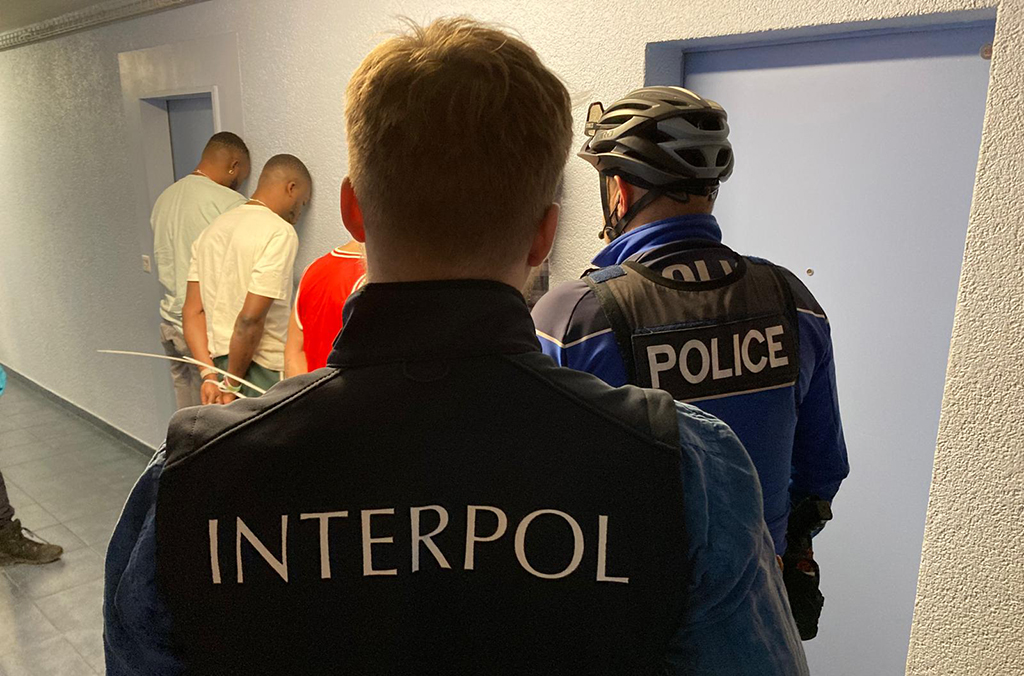
Europol Arrests Nine Western Balkan Drug Trafficking Cartel Members in Montenegro

0

This week, Montenegrin authorities have arrested nine high-value targets holding key positions in Western Balkan drug trafficking organisations. In total, 19 individuals were targeted in this action. Four received charges while in prison, and five others are still on the run.

This action is the result of national investigations, cooperation, and information exchange through Europol between the Australian Federal Police and New South Wales Police, the Montenegrin Special Police Division (Specialno Policijsko Odeljenje), and the United States Drugs Enforcement Administration (DEA). The investigation was initiated after law enforcement intercepted 1.8 tonnes of cocaine shipments from Europe to Australia between 2020 and 2021. 

The targeted individuals were closely linked to various Montenegrin criminal cells active within a larger drug trafficking network spread across the Balkan region and beyond. Some of the suspects allegedly belong to one of the most notorious and violent Montenegrin clans, while others are suspected of leading their own independent criminal groups.

One of the suspects, the leader of this criminal group, is allegedly responsible for multiple murders carried out during gang wars. 

Law enforcement authorities already knew the nine suspects, as they had appeared in several previous drug trafficking investigations. Investigators have identified that the networks where they played leading roles had developed a large logistics network to facilitate drug trafficking from the EU to Australia. They were able to supply cocaine from source countries and transport it for final distribution in European and Australian end markets. 

On July 17, 15 locations were searched in Montenegro, nine made arrests, and seizures were made, including documents, 22 firearms and 722 pieces of ammunition, 15 vehicles, two vessels, luxury watches and cash. 

In recent years, Western Balkan criminal networks have increasingly targeted the Australian drug market, as the illegal proceeds of cocaine trafficking there are significantly higher than European markets. The supply route includes Colombia, Ecuador, and Brazil, with transhipments from Southern Europe and Africa to Australia. If one kilo of cocaine costs several thousand euros in the source countries, it could reach more than €100,000 on the Australian black market.

Europol facilitated the exchange of information and provided continuous analytical support to the investigation. Europol also contributed to the overall case coordination among various agencies in the EU and beyond.  

    50 Alleged Narcotics Dealers Arrested After Cocaine-laden Sailboat Intercepted in Caribbean

    0

    Thirty-nine individuals were arrested on June 24 in Spain, Norway, Poland and the UK after cocaine worth an estimated €45 million was seized from a vessel at sea in 2023.

    The crew of eight people were also arrested during that initial interception. Simultaneously, a total of 47 house searches were carried out in Bulgaria, Colombia, Norway, Panama, Portugal, Spain and Trinidad and Tobago. Subsequent weeks saw three other individuals detained, bringing the total number of arrests to 50. 

    Europol has supported this investigation since August 2023. On December 20, 2023, authorities intercepted a sailboat in international waters off the coast of Martinique with 1,500 kilos of cocaine on board. Eight individuals, including the crew members and some involved through other means, were arrested that same day.

    Following this operation, in the framework of intelligence activities underway with its operational counterparts, Europol has been able to develop actionable intelligence regarding the drug trafficking activities of this organised crime group. This led to further investigations and operational activities involving 10 countries.

    The suspects were arrested as part of an international operation against drug trafficking led by the Spanish National Police (Policía Nacional). The Spanish authorities worked closely with the Norwegian Police, the United Kingdom’s National Crime Agency (NCA) and the United States Drug Enforcement Administration (US DEA) in the framework of an Operational Taskforce set up at Europol.

    The purpose of the task force was to target a drug trafficking organisation with links to the Western Balkan region, which authorities suspected of shipping large amounts of cocaine to Europe.

    During the investigation, the agents identified a total of 10 vessels used by the organisation along the ‘drug routes’ and that the criminals had different bases of operations in Spain and South America. In Spain, they used Valencia, Alicante, Almería, Málaga and the Canary Islands as logistics points before setting sail to South America.

    In South America, they used Brazil, Colombia, Guyana, Trinidad and Tobago, Saint Lucia, Barbados or Panama to keep the sailboats ready to sail with the drugs. This system meant shipments could move as soon as the orders from the leader of the criminal network and his lieutenant were received.

    The cocaine would then be picked off the coast of the Caribbean islands by sailboats which would shortly after set sail towards Spain, from where the cocaine was distributed onwards to different EU countries by overland transport. The crew for the sailboats had been recruited in Norway by one of the leaders of the drug trafficking organisation, who Europol had designated as a high-value target. This individual was among those arrested in Norway on June 24.

    This operation was the culmination of many months of meticulous planning in preparation of the final phase of the action. The partners have been working closely together in the framework of a Europol Operational Task Force to establish a joint strategy and to organise the extensive exchange of information.

    Europol provided continuous intelligence development to map out the targets and their criminal activity. The agency also financed an operational meeting off-site in Madrid. During the action day, one Europol expert was deployed to Marbella (Spain) to assist with the swift analysis of data as it was been collected, helping adjust the operational strategy as required. In addition, Europol funded the exchange of Spanish and Norwegian police officers for the action day. 

    Herrsching Murder: Suspected Killer of German Pensioner Arrested in Paris, Awaiting Extradition

    0

    In an operation showcasing the power of international police cooperation, the suspect in the murder of a 74-year-old man was arrested close to Paris, France, on July 18.

    According to Europol, this breakthrough was made possible through the collaborative efforts of law enforcement agencies across Europe, coordinated by Europol.

    On July 12, a pensioner was found murdered in his home in Herrsching, Upper Bavaria, Germany. The case sent shockwaves through the country, and the Bavarian police immediately launched an investigation to locate and arrest the suspected murderer.

    Through real-time intelligence exchange with its operational partners in Serbia, Europol developed reliable intelligence that the suspect had fled Germany and was hiding in France.

    Europol immediately provided this actionable intelligence to the German investigators and established coordination between the countries involved. The European Network of Fugitive Active Search Teams (ENFAST) was activated, connecting the different national units dealing with fugitive searches. 

    This international police effort culminated in the suspect’s arrest in a coordinated operation in Aubervilliers, France, on the morning of July 18. The suspect was taken into judicial detention and is awaiting extradition to Germany to face charges.

    The swift arrest of the alleged murderer underscores the power of international police cooperation facilitated by Europol.

    Connecting over 3,000 law enforcement authorities worldwide, Europol provides the network and secure communication channels to close the net on criminals trying to evade justice by crossing borders.

    Interconnected, Digital: How Migrant Smugglers, Human Traffickers Operate

    0

    The new report by Europol’s European Migrant Smuggling Centre (EMSC) looks into the latest developments and main threats in migrant smuggling and trafficking in human beings, based on the most recent operations supported by Europol.

    The report highlights the main challenges presented by the current criminal landscape and aims to help law enforcement step up the fight against criminal networks, which not only rob individuals of their dignity but directly threaten people’s lives.

    Migrant smuggling and human trafficking networks are highly adaptive and exploit geopolitical events, including economic and social crises to maximise their illegal profits. These networks swiftly identify criminal opportunities offered by the digital environment and take advantage of them to increase their illegal proceeds. Criminals abuse social media platforms, mobile applications, and cryptocurrencies to offer their illegal services, manage logistics and payments, and secure profits.

    In 2015, the European Union was confronted with an unprecedented migratory crisis. In response, in 2016, Europol increased its support to national law enforcement authorities with the creation of a dedicated hub – Europol’s European Migrant Smuggling Centre – to facilitate closer cross-border cooperation and the rapid exchange of operational information. 

    In 2023 alone, Europol supported 223 operations against migrant smuggling and human trafficking networks. The agency also provided national law enforcement authorities with 1,231 operational reports to advance their investigations in 2023. Europol has further developed the concept of Operational Task Forces (OTFs) in this crime area, with 11 OTFs targeting migrant smuggling and human trafficking networks. 

    Investigations into migrant smuggling and trafficking in human beings reveal a complex and dynamic criminal environment in which actors take advantage of existing infrastructures and engage in multiple illegal activities. These criminal networks also engage in a number of other criminal activities, such as drugs and arms trafficking, document fraud and violence.

    Migrant smuggling and trafficking in human beings are interconnected, especially in cases where irregular migrants are in debt to their smugglers and end up in labour or sexual exploitation schemes to pay the smuggling fees. The links between migrant smuggling, terrorism and the financing of terrorism are of particular concern.

    The main characteristics of the criminal networks involved in migrant smuggling and human trafficking:

    • Strong links to other crime areas and crime enablers;
    • High flexibility and adaptability;
    • Abuse of geopolitical, economic, environmental and social crises;
    • Intense cooperation with other criminal networks across borders within and outside the EU; 
    • Extension of violence towards irregular migrants, law enforcement, competitors and within the criminal networks themselves;
    • Increase in the digitalisation of core components of criminal activities.

    Strong partnerships to combat criminal networks globally 

    In April 2024, Europol hosted the conference “Tackling migrant smuggling in the digital domain” under the umbrella of the European Commission initiative Global Alliance to Counter Migrant Smuggling. During this event, over 100 experts from EU Member States, third-party countries, agencies and international organisations met to discuss the challenges and possible responses to migrant smuggling enabled by the use of online platforms.

    In June 2024, the Spanish National Police hosted Europol’s European Migrant Smuggling Centre’s Annual Conference in Madrid, attended by representatives from law enforcement authorities in the Member States and operational partner countries, from EU agencies and bodies, international organisations, as well as from the private sector.

    The meeting focussed on the current threats and challenges faced by investigators. The conference also furthered the exchange of good practices and difficulties in investigating the digital dimension of migrant smuggling, aiming to strengthen the EU’s tools in the fight against this criminal threat. 

    Operation Pandora: 85 Arrests, 6,400 Objects Recovered in International Operation Against Art Trafficking

    0

    The eighth edition of Operation Pandora saw customs and law enforcement authorities from 25 countries join forces against international art trafficking. Led by the Spanish Guardia Civil, with the support of Europol and INTERPOL, the operation resulted in 85 arrests and the recovery of more than 6,400 cultural goods.

    During Pandora VIII, several thousand checks were carried out at airports, ports and border crossing points, as well as in auction houses, museums and private residences. Law enforcement also patrolled the web and conducted 6,000 online checks, leading to the recovery of 580 stolen goods.

    A total of 113 criminal and 137 administrative cases are still ongoing, with more arrests and seizures expected.

    Pandora VIII resulted in the recovery of the following stolen artefacts, among others:

    • Spanish National Police collaborated with the Ukrainian National Police to recover 11 gold items valued at more than EUR 60 million. The criminal case involved money laundering and illicit trafficking of archaeological items stemming from the ‘Scythian’ culture, which had been stolen in Ukraine and smuggled to Spain.
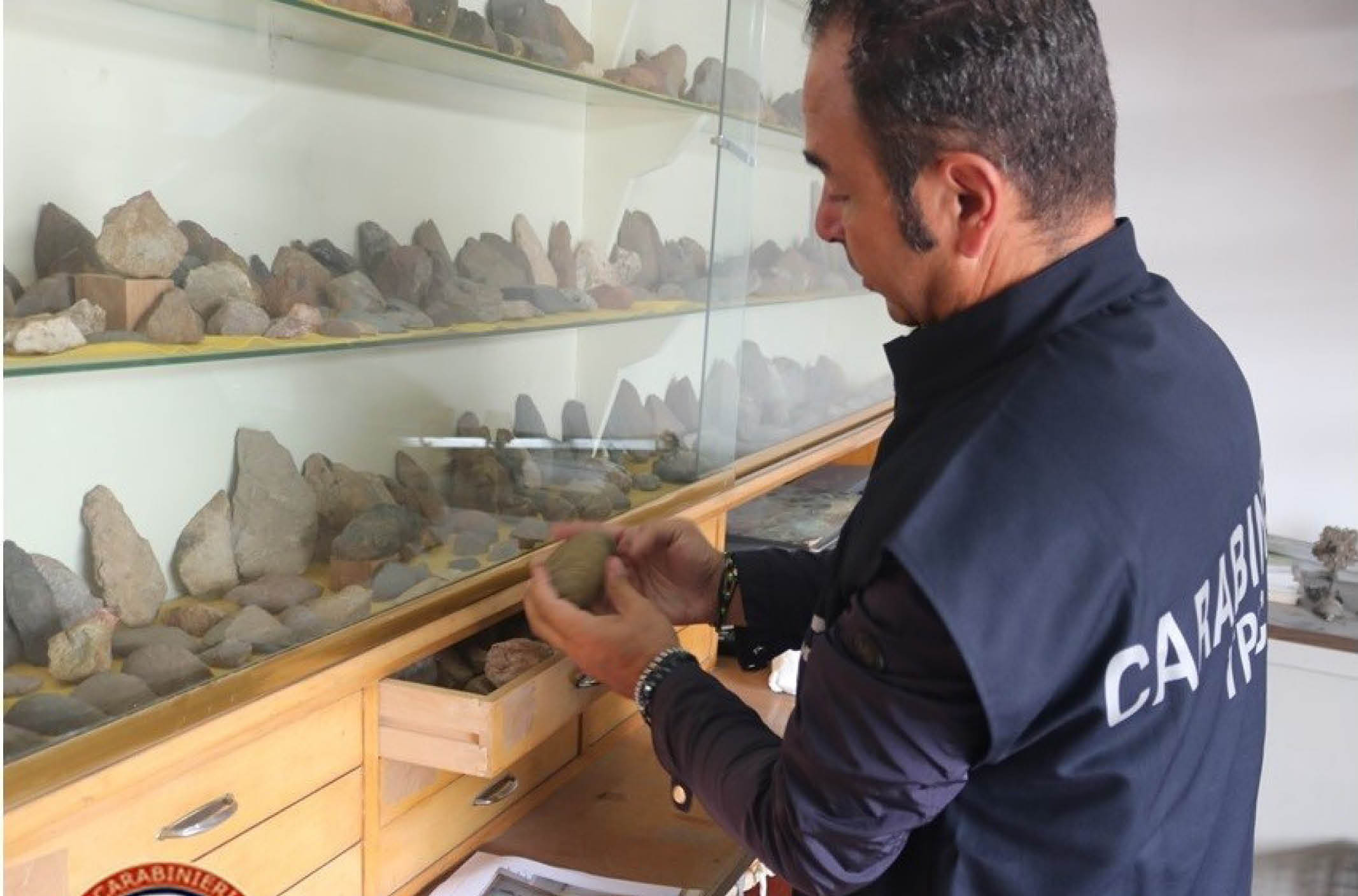
    • In another case, the Spanish Guardia Civil of Córdoba, with the support and advice of archaeologists from the government of Andalucía as well as the Archaeological Museum of Sevilla, seized a private collection of 350 objects. The collection consisted of lithic, ceramic and metal pieces from various archaeological periods.
    • Romanian Police recovered a wooden iconostasis dated between 1850 and 1880, stolen from a church in Romania and which had been put up for sale online.
    • The Bulgarian Customs Agency seized 432 ancient coins from Türkiye and en route for France.
    • In two investigations by the Hellenic Police, 43 ancient amphorae were seized and two people arrested.
    • After conducting online checks, the Polish National Police located and seized 229 objects in an antique shop. Some of the items were made of ivory, with a total estimated value of EUR 140,000.
    • The Italian Carabinieri Command for the Protection of Cultural Heritage identified and seized a contemporary painting being sold online. If authenticated, the painting would have been valued at approximately EUR 150,000. During the search, officers also found various counterfeit items.
    • In a separate investigation, the Carabinieri seized over 2,000 fragments of ceramic and lithic artifacts such as arrowheads and spearheads. The ancient items, stemming from the Neolithic and Bronze Age periods, had been offered for sale online.
    • French authorities seized an illegally exported painting by Vietnamese artist Mai Thứ (1906 – 1980) at Paris Charles de Gaulle Airport. The painting is valued at EUR 167,440.
    • In cooperation with national partners, the Czech National Police detected and investigated the sale of several stolen historical objects. Among them was a wooden statue of Saint Bartholomew (dated between 1658 and 1660), which was secured and returned to its original owner. This national cultural artifact had been stolen from the Last Supper Chapel in Římov in 1994 and later sold online.

    INTERPOL supported Pandora VIII by facilitating the exchange of information between participating countries, notably with the Balkan countries. A dedicated officer was also available throughout the operation to check frontline seizures against INTERPOL’s Stolen Works of Art Database and support officers on the ground in their use of the ID-Art mobile application.

    As a co-leader of the operation, Europol played a key role by facilitating information exchange and providing analytical and operational support to the individual national investigations.

    Operation Pandora, which was first launched in 2016, is an annual law enforcement operation. It is carried out in the framework of the European Multidisciplinary Platform Against Criminal Threats (EMPACT).

    Full List of Names of La Mara Salvatrucha (MS-13) Gangsters Arrested, Convicted, Jailed

    0

    The jailed gang members were sentenced as follows:

    • Jorge Flores, 31, life plus 65 years in prison;
    • Kevin Tidwell, 30, life plus 30 years in prison;
    • Luis Colindres, 27, 55 years in prison;
    • Jose Pineda-Caceres, 25, 52 years and three months in prison;
    • Gerson Serrano-Ramirez, 36, 34 years in prison;
    • Carlos Ochoa-Martinez, 34, 30 years in prison;
    • Francisco Avila, 26, 30 years in prison;
    • Franklin Hernandez, 24, 28 years and 11 months in prison;
    • Jason Sandoval, 38, 20 years in prison;
    • Oscar Delgado-Flores, 30, 19 years and eight months in prison;
    • Angel Daniel-Garcia, 38, 13 years and nine months in prison;
    • Bryan Paredes, 27, 10 years in prison;
    • Jose Calderon, 24, 10 years in prison;
    • Hector Venturas, 28, 12 years and seven months in prison;
    • Juan Melendez, 25, eight years in prison;
    • Franklin Pineda-Caceres, 23, seven years and six months in prison;
    • Sergio Alvarado-Ochoa, 30, two years and six months in prison; and
    • Anabely Caceres, 44, time-served sentence of one year and one month.

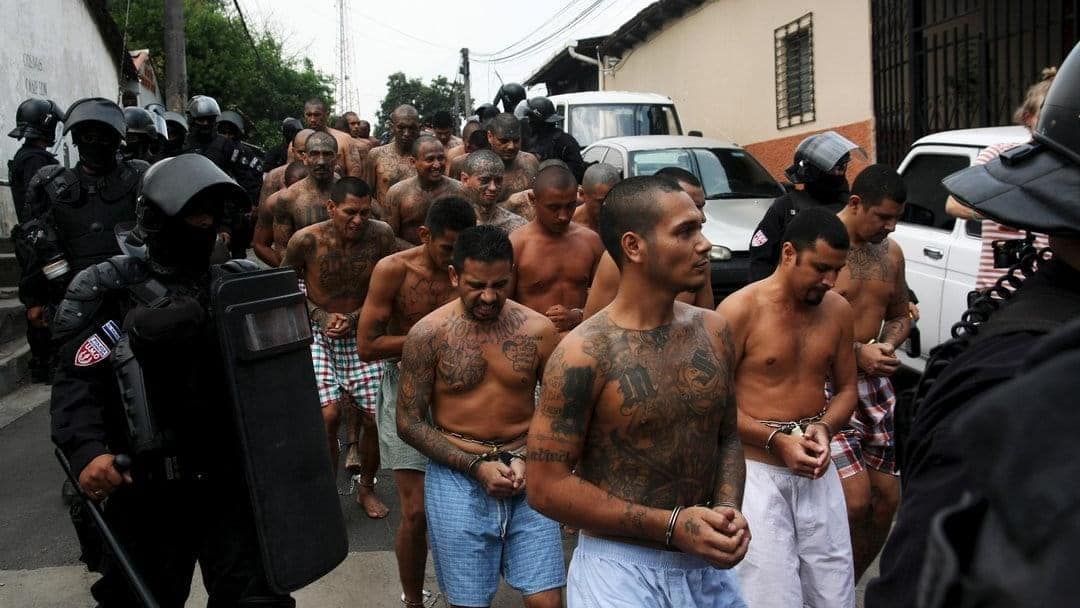
    The convicts were members and associates of MS-13’s Thompson Place Locos Salvatrucha clique, which has operated in Nashville, Tennessee, since at least 2014. MS-13, an international street gang composed largely of individuals of Salvadoran or Central American descent, seeks to protect its power, territory, reputation, and profits through murder, attempted murder, drug trafficking, robbery, kidnappings, extortion, and other criminal activities.

    Eighteen MS-13 Gangsters Sentenced for 10 Murders, Seven Attempted Murders, Kidnapping, Drug Trafficking

    0

    The last defendant of 18 La Mara Salvatrucha (MS-13) gang members charged in connection with a multi-year investigation by federal, state, and local law enforcement has been sentenced. The investigation involved charges of racketeering conspiracy, murder in aid of racketeering, attempted murder in aid of racketeering, kidnapping, drug trafficking, firearms offences, obstruction of justice, and destruction of evidence.

    According to court documents and evidence presented at trial, the defendants were members and associates of MS-13’s Thompson Place Locos Salvatrucha clique, which has operated in Nashville, Tennessee, since at least 2014. MS-13, an international street gang composed largely of individuals of Salvadoran or Central American descent, seeks to protect its power, territory, reputation, and profits through murder, attempted murder, drug trafficking, robbery, kidnappings, extortion, and other criminal activities.

    In addition, cooperation with law enforcement is strictly prohibited under MS-13’s rules. Members are required to confront, fight, and kill rival gang members and to retaliate quickly and viciously against anyone who disrespects or threatens the gang’s authority, power, reputation, or control of a neighbourhood. Prospective members committed murders to gain entrance into MS-13 or to earn respect among the members.

    In addition to drug distribution and firearms offences, the defendants were also convicted of conspiring with each other and committing acts of violence, including the following:

    On April 6, 2016, MS-13 members and associates, including Jose Pineda-Caceres, murdered Victim 1 because they believed he was a rival gang member. They lured Victim 1 to a secluded field in a rural area of Davidson County, Tennessee, under the guise of going to smoke marijuana. When they arrived at the field, the gang members confronted Victim 1 about their belief that he was in a rival gang before shooting him multiple times and killing him.

    On July 31, 2016, MS-13 members and associates, including Pineda-Caceres, went to a South Nashville nightclub, where Pineda-Caceres saw Victim 2, who he believed was a rival gang member. Victim 2 and his younger sister, Victim 3, were at the nightclub with friends, celebrating Victim 3’s 18th birthday.

    When Victim 2 left the nightclub with his friends and Victim 3, Pineda-Caceres and another MS-13 associate chased Victim 2’s car on Interstate 24 and shot into it. A bullet stuck Victim 3 and killed her. Pineda-Caceres fled the United States after this murder but was arrested when he returned to the United States in November 2017.

    On November 13, 2016, MS-13 members and associates, including Jorge Flores, were at a South Nashville nightclub when they saw Victim 4, who they believed was a rival gang member. The MS-13 members and associates, including Flores, followed Victim 4 from the nightclub to his apartment in Antioch, Tennessee. An MS-13 member shot Victim 4 and then fled. Victim 4 died from his injuries.

    On or about January 18, 2017, MS-13 members and associates, including Jorge Flores, saw Victim 5, who they believed was responsible for a recent murder of an MS-13 member, at a Wal-Mart in Antioch. The MS-13 members chased Victim 5 as he rode in a car with his girlfriend and her young children. The MS-13 members eventually cornered the car and shot into it, striking Victim 5 multiple times.

    In February 2017, MS-13 members and associates, including Carlos Ochoa and Jorge Flores, conspired to murder rival drug dealers, Victims 6 and 7. The MS-13 members also conspired to murder another MS-13 member because he associated with Victims 6 and 7. On February 18, 2017, MS-13 members and associates chased the three victims in a car for miles and attempted to kill them by shooting at them.

    The gang members chased their victims to a South Nashville nightclub, shot at them, and continuously shot into the nightclub, which was filled with patrons. The following weekend, on February 25, 2017, MS-13 members and associates chased the victims again and shot Victim 6 in the neck and torso, causing Victim 6 to suffer life-threatening injuries. Metropolitan Nashville Police Department officers promptly provided medical care to Victim 6, helping to save his life. 

    On April 2, 2017, MS-13 members and associates were inside a South Nashville nightclub when they saw Victims 8 and 9. The gang members informed another MS-13 member and MS-13 associate, who were not in the nightclub, of the victims’ presence inside the nightclub and the gang members’ belief that the victims were rival gang members. The MS-13 member and associate outside of the nightclub retrieved an AK-47 rifle and shot Victims 8 and 9 multiple times when they left the club, killing them both.

    On May 21, 2017, MS-13 members, including Flores and Kevin Tidwell, were parked in the parking lot of a South Nashville nightclub when they saw Victim 10, who they believed to be a rival gang member, pull into the parking lot. The gang members drove next to Victim 10’s car and shot him numerous times in his head and torso as he sat in his car, killing him.

    On May 27, 2017, MS-13 members were at a convenience store in South Nashville, where Tidwell got into a verbal altercation with Victim 11 and felt disrespected. Tidwell got into a truck driven by Flores and waited behind the store until Victim 11 and Victim 12 drove away from the store. The MS-13 members chased the car while shooting at it with an AK-47 rifle and a 9mm pistol. Victim 11 was struck by the gunfire and died from his injuries. The MS-13 members later burned the truck in an abandoned field.

    On June 17, 2017, several MS-13 members were at a nightclub and confronted Victim 13 for falsely claiming to be an MS-13 member. The gang members summoned additional members to the club for assistance. When the additional members arrived, a fight ensued between the MS-13 members and Victim 13 and his friends. Gerson Serrano-Ramirez ultimately retrieved an AK-47 rifle from a car and fired a round of ammunition into the air. The MS-13 members then forced Victim 13 into a car and took him to a secluded location, where they beat him.

    On July 25, 2017, at Serrano-Ramirez’s home, Serrano-Ramirez physically assaulted Victim 14 for saying that MS-13 members and their drug activities were causing problems in a local nightclub. Serrano-Ramirez accused Victim 14 of cooperating with law enforcement, then pointed a rifle at him, choked him with the strap of the rifle, sprayed bleach in his eyes, suffocated him by placing a plastic bag over his head, and broke one of his fingers with a pair of pliers.

    On September 24, 2017, MS-13 members, including Luis Colindres, saw Victim 15, who they believed to be a rival gang member, in a South Nashville nightclub. MS-13 members watched him leave the nightclub with two other individuals, then drove to his apartment complex to await his return. When Victim 15 arrived, the gang members blocked the car with their car, got out, and shot Victim 15 in the head and torso multiple times, killing him. The members also shot one of the car’s passengers, Victim 16, in the head and torso multiple times to prevent him from cooperating with law enforcement.

    Later that evening, on September 24, 2017, MS-13 members and associates, including Flores and Colindres, lured Victim 17 to a secluded location to murder him for failing to repay a drug debt. When Victim 17 arrived, they ordered him into the trunk of a car and shot him multiple times. They then drove Victim 17’s body to Cheatham County, Tennessee, where they burned him inside the car’s trunk to destroy evidence of the murder.

    Throughout the course of the conspiracy, the MS-13 members committed several armed carjackings of citizens near the Nashville, Tennessee, area.

    The defendants were sentenced as follows:

    • Jorge Flores, 31, life plus 65 years in prison;
    • Kevin Tidwell, 30, life plus 30 years in prison;
    • Luis Colindres, 27, 55 years in prison;
    • Jose Pineda-Caceres, 25, 52 years and three months in prison;
    • Gerson Serrano-Ramirez, 36, 34 years in prison;
    • Carlos Ochoa-Martinez, 34, 30 years in prison;
    • Francisco Avila, 26, 30 years in prison;
    • Franklin Hernandez, 24, 28 years and 11 months in prison;
    • Jason Sandoval, 38, 20 years in prison;
    • Oscar Delgado-Flores, 30, 19 years and eight months in prison;
    • Angel Daniel-Garcia, 38, 13 years and nine months in prison;
    • Bryan Paredes, 27, 10 years in prison;
    • Jose Calderon, 24, 10 years in prison;
    • Hector Venturas, 28, 12 years and seven months in prison;
    • Juan Melendez, 25, eight years in prison;
    • Franklin Pineda-Caceres, 23, seven years and six months in prison;
    • Sergio Alvarado-Ochoa, 30, two years and six months in prison; and
    • Anabely Caceres, 44, time-served sentence of one year and one month.

    U.S. Justice Department Sues Illinois Landlord Michael J. DeWitte for Sexually Harassing Tenants

    0

    The Justice Department filed a lawsuit today against Michael J. DeWitte of Washington, Illinois, for sexually harassing female tenants and housing applicants in violation of the Fair Housing Act.

    DeWitte has managed residential rental properties in Peoria, Illinois, and other central Illinois counties since at least 2002.

    “Landlords cannot use their position of power to sexually harass someone who simply wants a place to live,” said Assistant Attorney General Kristen Clarke of the Justice Department’s Civil Rights Division. “The Fair Housing Act protects tenants’ right to housing free of any kind of sexual advance or harassment. We encourage survivors to speak out so that we can vindicate their fair housing rights.”

    “No one should ever be asked to trade their body for a home,” said U.S. Attorney Gregory K. Harris for the Central District of Illinois. “I urge any other tenants alleging discrimination by DeWitte to contact my office. When landlords abuse their power and attempt to take advantage of the vulnerable in violation of civil rights laws, my office and the Justice Department stand ready to hold them accountable.”

    The lawsuit, filed in the U.S. District Court for the Central District of Illinois, alleges that, since at least 2002, DeWitte subjected female tenants and applicants to unwelcome sexual harassment that included sexual contact and comments about their physical appearances, offers to strip for female tenants; removing his pants while giving a tour to a female housing applicant; exposing his genitals to female tenants; asking female tenants on dates; requesting sex in exchange for reduced rent or other housing benefits; and evicting female tenants when they did not give in to his sexual advances.

    The lawsuit seeks monetary damages to compensate persons harmed by the alleged harassment, civil penalties to vindicate the public interest and a court order barring future discrimination.

    Alabama’s Ray ‘Abdolrahman Hantoosh’ Hunt Pleads Guilty to Violating Iran Sanctions Using Vega Tools LLC

    0

    Ray Hunt, also known as Abdolrahman Hantoosh, Rahman Hantoosh and Rahman Natooshas, 70, of Owens Cross Roads, Alabama, pleaded guilty to conspiracy to export U.S.-origin goods to the Islamic Republic of Iran in violation of trade sanctions.

    According to court documents, in May 2014, Hunt registered Vega Tools LLC with the Alabama Secretary of State, listing the nature of the business as “the purchase/resale of equipment for the energy sector.”

    He operated Vega Tools, including purchasing, receiving and shipping U.S.-origin goods from locations in Madison County, Alabama. Beginning at least as early as 2015, Hunt conspired with two Iranian companies located in Tehran, Iran, to illegally export U.S.-manufactured industrial equipment for use in Iran’s oil, gas and petrochemical industries.

    Hunt engaged in a series of deceptive practices to avoid detection by U.S. authorities, including using third-party transshipment companies in Turkey and the United Arab Emirates (UAE) and routing payments through UAE banks, as well as lying to shipping companies about the value of his exports to prevent the filing of electronic export information to U.S. authorities.

    Hunt lied to suppliers and shippers by claiming the items he purchased on behalf of the Iranian co-conspirators were destined for end users in Turkey and UAE while knowing the exports were ultimately destined for Iran. Hunt also lied to U.S. Customs and Border Patrol officers regarding the nature and existence of his business when questioned upon his return from a March 2020 trip to Iran.   

    Hunt pleaded guilty to a conspiracy charge and faces a maximum penalty of five years. A federal district court judge will determine any sentence after considering the U.S. Sentencing Guidelines and other statutory factors.

    Russia’s Ruslan Magomedovich Astamirov, Mikhail Vasiliev Convicted over LockBit Ransomware Attacks

    0

    Two foreign nationals pleaded guilty Thursday to participating in the LockBit ransomware group—at various times the most prolific ransomware variant in the world—and to deploying LockBit attacks against victims in the United States and worldwide.

    “Today’s convictions reflect the latest returns on the Department’s investment in disrupting ransomware threats, prioritising victims, and holding cybercriminals accountable,” said Deputy Attorney General Lisa Monaco. “In executing our all-tools cyber enforcement strategy, we’ve dealt significant blows to destructive ransomware groups like LockBit, as we did earlier this year, seizing control of LockBit infrastructure and distributing decryption keys to their victims.”  

    “The defendants committed ransomware attacks against victims in the United States and around the world through LockBit, which was one of the most destructive ransomware groups in the world,” said Principal Deputy Assistant Attorney General Nicole M. Argentieri, head of the Justice Department’s Criminal Division.

    According to court documents, Ruslan Magomedovich Astamirov (АСТАМИРОВ, Руслан Магомедовичь), 21, a Russian national of the Chechen Republic, Russia, and Mikhail Vasiliev, 34, a dual Canadian and Russian national of Bradford, Ontario, were members of LockBit.

    Between January 2020 and February 2024, LockBit grew into what was, at times, the most active and destructive ransomware group in the world. LockBit attacked more than 2,500 victims in at least 120 countries, including 1,800 victims in the United States.

    Those victims included individuals, small businesses, multinational corporations, hospitals, schools, nonprofit organisations, critical infrastructure, and government and law-enforcement agencies. LockBit’s members extorted at least approximately $500 million in ransom payments from their victims and caused billions of dollars in additional losses to victims, including costs like lost revenue and incident response and recovery.

    LockBit’s “affiliate” members, including Vasiliev and Astamirov, first identified and unlawfully accessed vulnerable computer systems and then deployed LockBit ransomware to steal and encrypt stored data. When LockBit attacks were successful, LockBit’s affiliate members then demanded ransoms from their victims in exchange for decrypting the victims’ data and then claiming to delete the affiliates’ copies of the data.

    When victims did not pay the demanded ransoms, LockBit’s affiliates often left the victim’s data permanently encrypted and published the stolen data, including highly sensitive information, on a publicly accessible internet site under LockBit’s control.

    “Astamirov and Vasiliev thought that they could deploy LockBit from the shadows, wreaking havoc and pocketing massive ransom payments from their victims without consequence,” said U.S. Attorney Philip R. Sellinger for the District of New Jersey.

    “Astamirov and Vasiliev were members of the LockBit ransomware group, which has caused severe harm around the globe by attacking computer systems in over a hundred countries, damaging organisations ranging from government and law-enforcement agencies to hospitals and schools,” said FBI Deputy Director Paul Abbate.

    Between 2020 and 2023, Astamirov deployed LockBit against at least 12 victims, including businesses in Virginia, Japan, France, Scotland, and Kenya. Operating under the online aliases “BETTERPAY,” “offtitan,” and “Eastfarmer,” he extorted $1.9 million from those victims. As part of his plea agreement, Astamirov agreed to forfeit, among other assets, $350,000 in seized cryptocurrency that he extorted from one of his LockBit victims. Astamirov was first charged and arrested in this matter in June 2023.

    Between 2021 and 2023, Vasiliev, operating under the online aliases “Ghostrider,” “Free,” “Digitalocean90,” “Digitalocean99,” “Digitalwaters99,” and “Newwave110,” deployed LockBit against at least 12 victims, including businesses in New Jersey, Michigan, the United Kingdom, and Switzerland. He also deployed LockBit against an educational facility in England and a school in Switzerland.

    Through these attacks, Vasiliev caused at least $500,000 in damage and losses to his victims. Vasiliev was first charged in this matter and arrested in Canada by Canadian authorities in November 2022 and extradited to the United States in June.

    Astamirov pleaded guilty to a two-count information charging him with conspiracy to commit computer fraud and abuse and conspiracy to commit wire fraud. He faces a maximum penalty of 25 years in prison. Vasiliev pleaded guilty to a four-count information charging him with conspiracy to commit computer fraud and abuse, intentional damage to a protected computer, transmission of a threat in relation to damaging a protected computer, and conspiracy to commit wire fraud.

    He faces a maximum penalty of 45 years in prison. A sentencing date has not yet been set. A federal district court judge will determine any sentence after considering the U.S. Sentencing Guidelines and other statutory factors.

    Today’s guilty pleas follow a recent disruption of LockBit ransomware in February by the UK National Crime Agency’s (NCA) Cyber Division, which worked in cooperation with the Justice Department, FBI, and other international law enforcement partners.

    As previously announced by the Department, authorities disrupted LockBit by seizing numerous public-facing websites used by LockBit to connect to the organisation’s infrastructure and by seizing control of servers used by LockBit administrators, thereby disrupting the ability of LockBit actors to attack and encrypt networks and extort victims by threatening to publish stolen data. This disruption greatly diminished LockBit’s reputation and ability to attack further victims, as alleged by documents filed in this case.

    Today’s guilty pleas also follow prior announcements of charges brought in the District of New Jersey against four other LockBit members, including its alleged creator, developer, and administrator, Dmitry Yuryevich Khoroshev. According to an indictment unsealed in May, Khoroshev allegedly acted as the group’s administrator from as early as September 2019 through 2024.

    In that role,  Khoroshev recruited new affiliate members, spoke for the group publicly under the alias “LockBitSupp,” and developed and maintained the infrastructure used by affiliates to deploy LockBit attacks. Khoroshev also took 20 per cent of each ransom paid by LockBit victims, allowing him to personally derive at least $100 million over that period.

    Khoroshev is currently the subject of a reward of up to $10 million through the U.S. Department of State’s Transnational Organised Crime (TOC) Rewards Program, with information accepted through the FBI tip website at https://tips.fbi.gov/home.

    In February 2024, in parallel with the disruption operation, an indictment was unsealed in the District of New Jersey charging Russian nationals Artur Sungatov and Ivan Kondratyev, also known as Bassterlord, with deploying LockBit against numerous victims throughout the United States, including businesses in the manufacturing and other industries, as well as victims around the world in the semiconductor and other industries.

    In May 2023, two indictments were unsealed in Washington, D.C., and the District of New Jersey, charging Mikhail Matveev, also known as Wazawaka, m1x, Boriselcin, and Uhodiransomwar, with using different ransomware variants, including LockBit, to attack numerous victims throughout the United States, including the Washington, D.C., Metropolitan Police Department. Matveev is currently the subject of a reward of up to $10 million through the U.S. Department of State’s TOC Rewards Program, with information accepted through the FBI tip website at tips.fbi.gov/.

    The U.S. Department of State’s TOC Rewards Program is also offering rewards of up to $10 million for information leading to the identification and location of any individuals who hold a key leadership position in LockBit and up to $5 million for information leading to the arrest and conviction in any country of any individual participating or attempting to participate in LockBit.

    Khoroshev, Matveev, Sungatov, and Kondratyev have also been designated for sanctions by the Department of the Treasury’s Office of Foreign Assets Control for their roles in launching cyberattacks.